Guide
A guide to Ilonggo food.
Clear soups, charcoal-grilled chicken, sticky rice and muscovado: the 21 dishes of Iloilo and Negros, told by someone who grew up eating them.
By Roberto Sabanal · Updated

Ilonggo or Hiligaynon?
I am from Negros, and I grew up calling my language Ilonggo. It was only years later that I learned its real name is Hiligaynon. Most people I know from Negros still say Ilonggo, and I am not sure why. Hiligaynon is the name of the language, Ilonggo the name of the people of Iloilo, and in everyday speech it became the name of the language too. On this site I use Ilonggo for the food and Hiligaynon for the language.
The same language is spoken across Panay and in Negros Occidental, which is why a Negrense and an Ilonggo can sit at the same table and order in the same words. (Negros Oriental, across the island, mostly speaks Cebuano.) Their food is so close that I find it hard to say where one ends and the other begins. This guide covers both.
Iloilo and Negros: one table
The two places are close because of sugar. When Iloilo's port opened to foreign trade in the 1850s and sugar boomed, Ilonggo families crossed the Guimaras Strait to plant cane in Negros. They brought their language, their saints and their recipes with them, and the sugar money that followed paid for the big houses, the long family tables and the habit of feeding everyone who walks in.
That is why muscovado, coconut and sticky rice show up on both sides of the water, and why the same dishes are cooked in Bacolod and in Iloilo City with only small differences. Iloilo City is officially recognized as the first UNESCO Creative City of Gastronomy in the Philippines, a title that puts its batchoy, its Molo dumpling soup and its pasalubong shops on the world map. I eat all of it as my own food too.
What makes Ilonggo cooking its own
It is a home cuisine, and it follows a few habits.
Clear, gentle broths
Pochero without tomato sauce, binakol in coconut water, laswa with only shrimp and vegetables: the soups let the ingredients taste of themselves.
Sour and sweet in balance
Kadyos baboy langka gets its tang from batwan or tamarind, pochero is sweetened by saba bananas, and even the grilled chicken is basted with annatto and calamansi.
Sticky rice, coconut and muscovado
The sugarlands of Negros and Panay turn out dark muscovado, and it ends up in ibus, kalamay hati, biko and bitso-bitso.
Fresh and not fussy
Vegetables are picked the same day, fish and pork are cooked simply, and the sauce is often just guinamos, fermented fish, or a dip of vinegar and chili.
Ilonggo and Negrense dishes
21 dishes, each linked to a full recipe with ingredients, timed steps and calories per serving.
Soups and stews
The heart of the Ilonggo table, eaten with a lot of rice.
La Paz Batchoy
Egg noodles in a rich pork, beef and shrimp broth, topped with sliced pork, liver, crushed chicharon and fried garlic. The noodle soup of Iloilo City.

Pancit Molo
Clear chicken soup with pork and shrimp wontons, named after the district of Molo in Iloilo City.
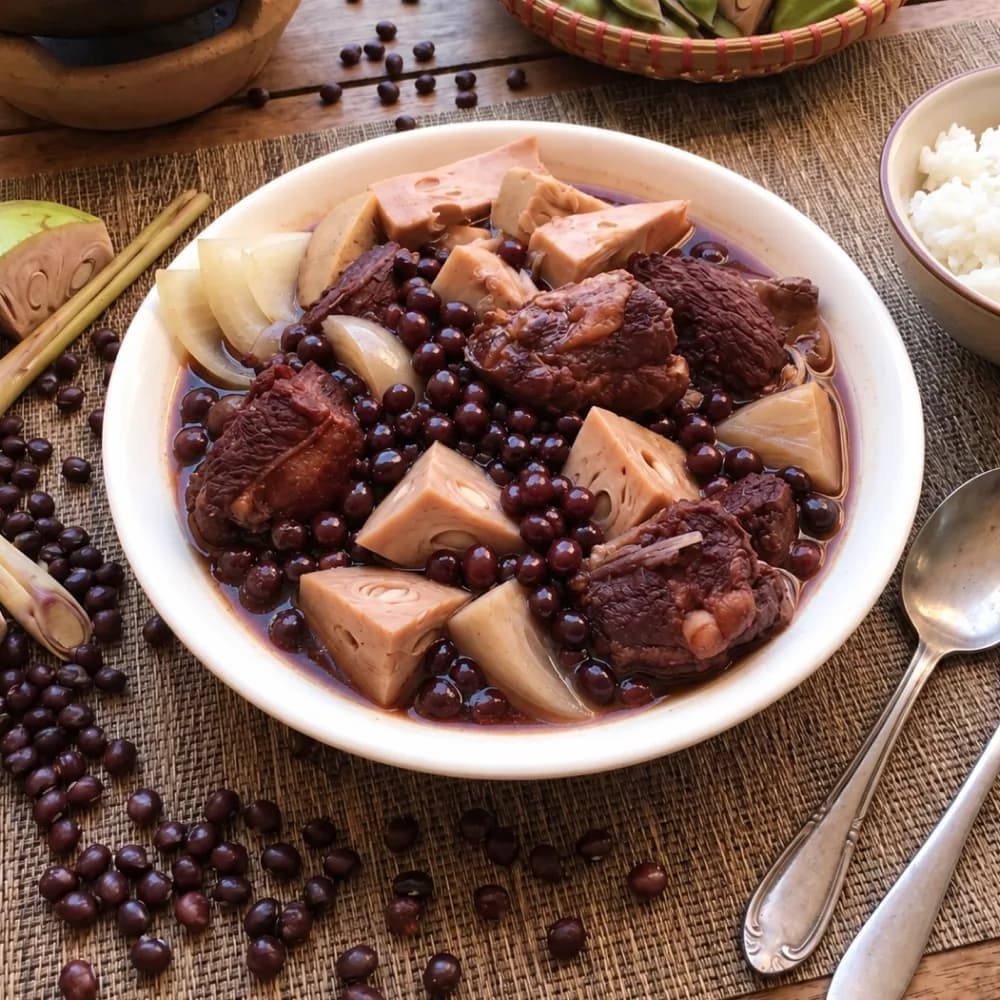
Kadyos, Baboy at Langka
The sour, savory soup of Negros and Iloilo: pork hock, pigeon peas and young jackfruit with lemongrass.

Laswa
A mixed vegetable soup of squash, okra, eggplant and greens with a little shrimp. Light and sweet.

Chicken Binakol
Chicken soup in young coconut water, with strips of tender coconut meat and ginger.

Ilonggo's Pork Pochero
Pork and saba bananas in a clear, peppery broth, cooked without the tomato sauce used in Luzon.

Ilonggo's Chicken Pochero
The same clear-broth stew with chicken, potatoes and cabbage.
Grilled, braised and fresh
Dishes from the Bacolod grills and the Silay kitchens, and the festive rice.
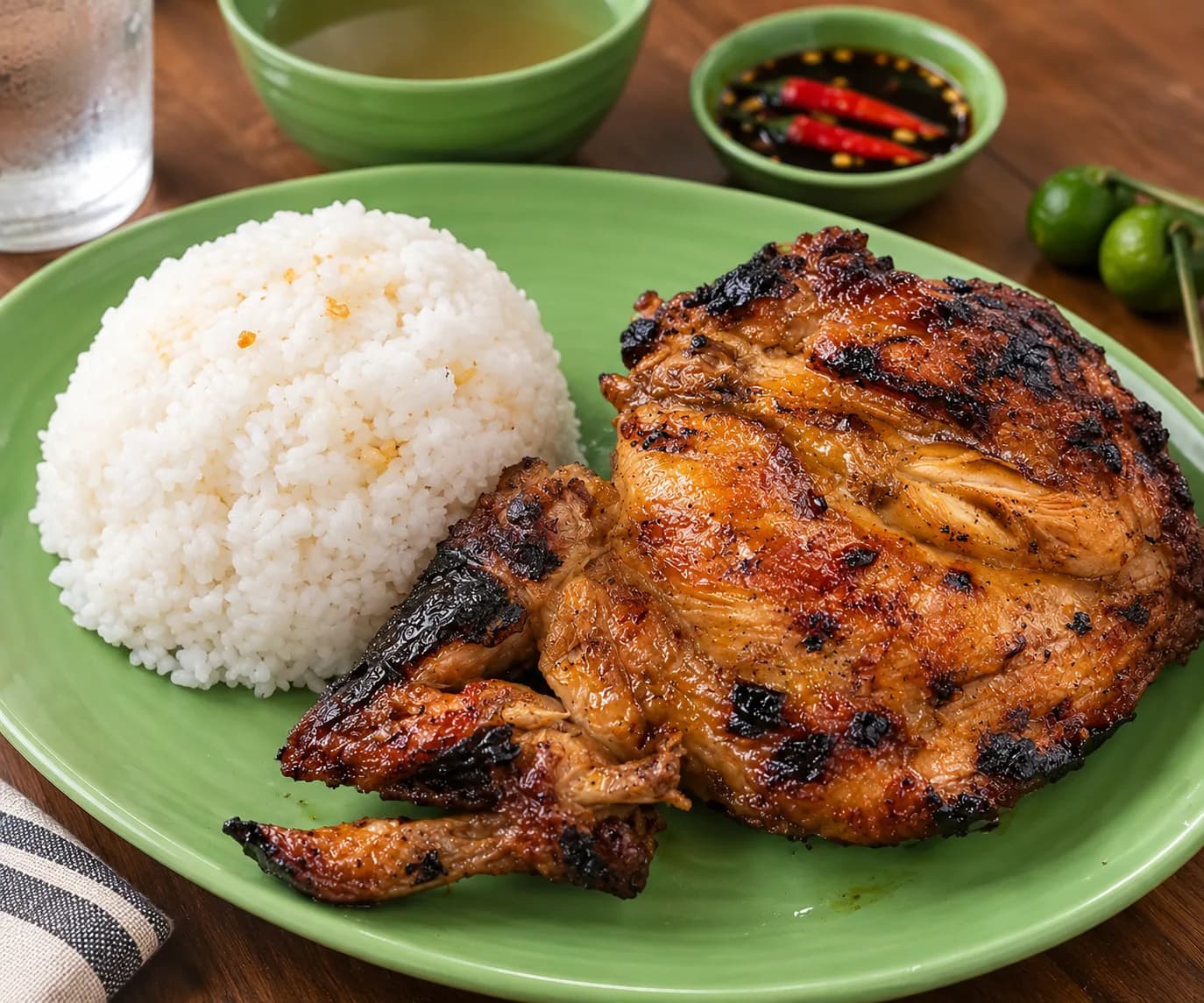
Chicken Inasal
Chicken marinated in lemongrass, calamansi and vinegar, then basted with annatto oil over charcoal. The grilled chicken of Bacolod.
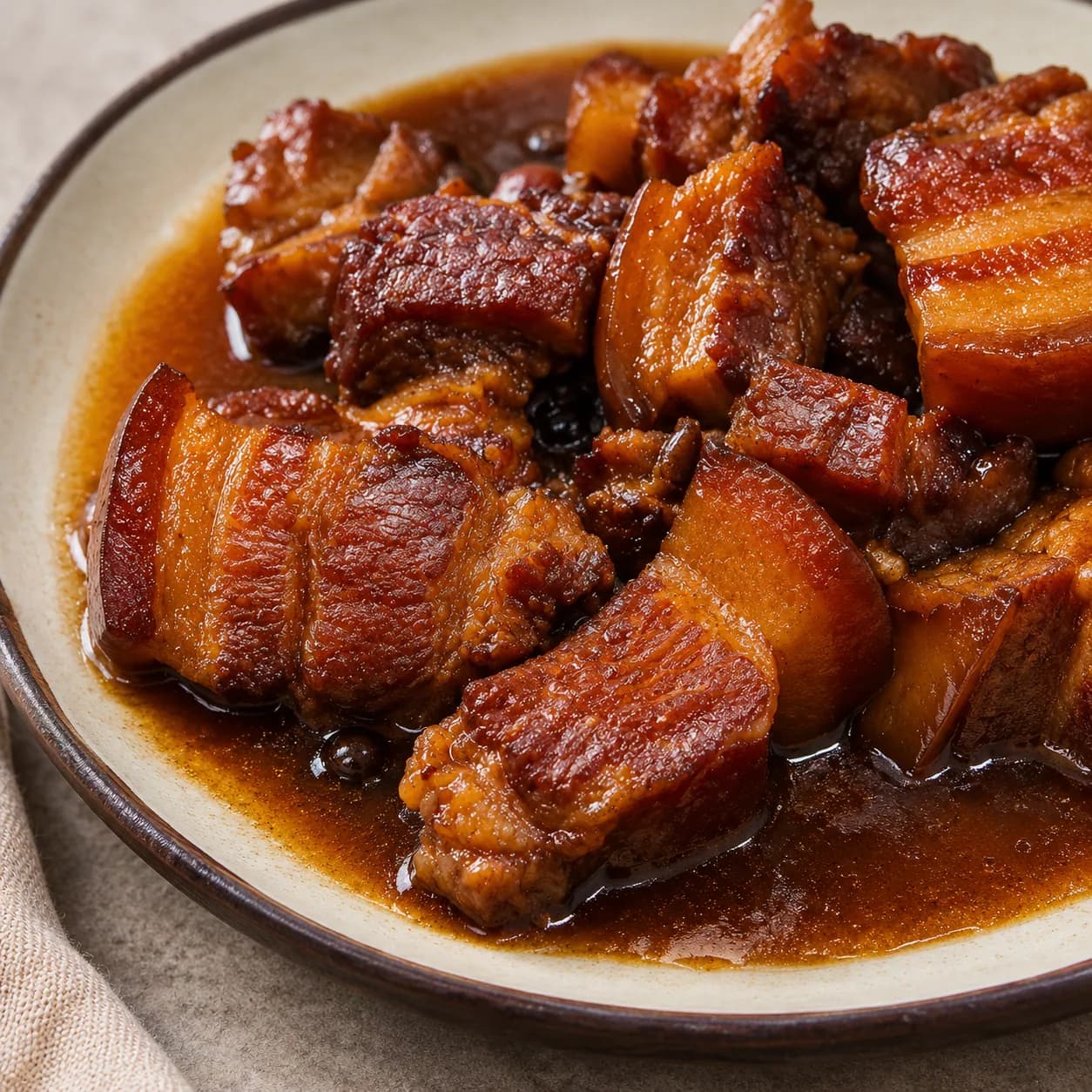
Humba
A Visayan braise of pork belly in soy sauce, vinegar, brown sugar and fermented black beans.
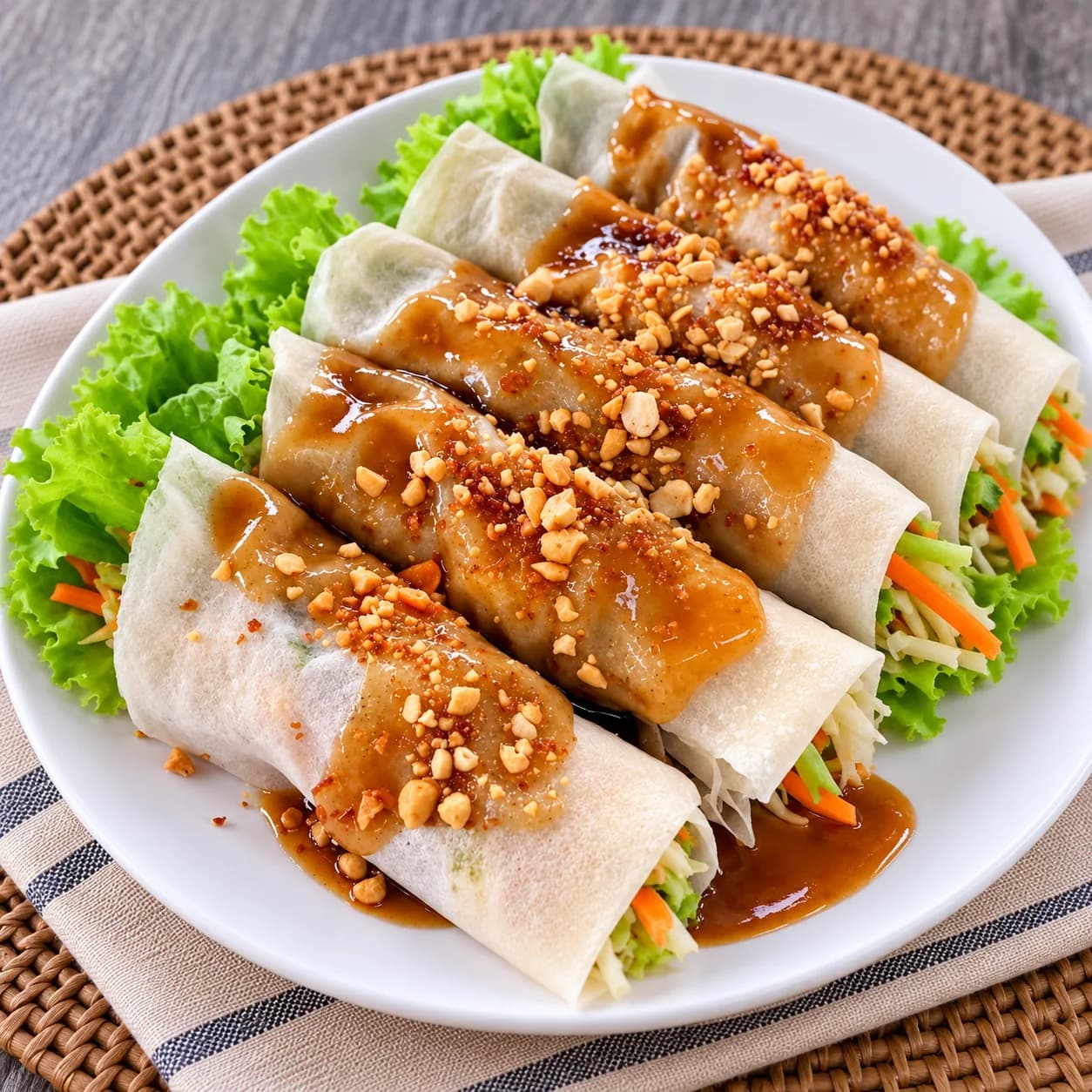
Lumpiang Sariwa
A fresh crepe filled with cooked vegetables and topped with sweet garlic sauce and peanuts, the way Silay serves it.
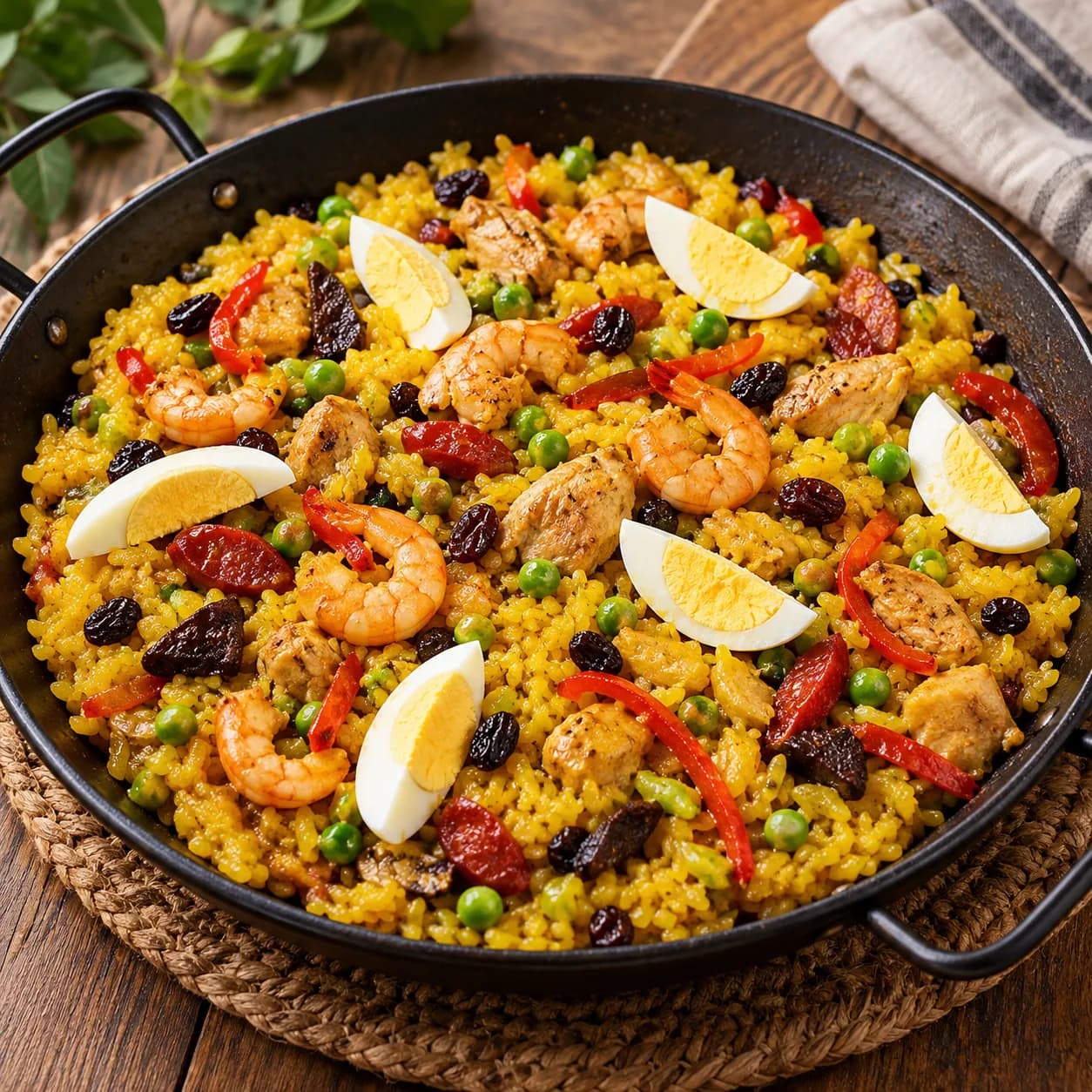
Valenciana
Glutinous rice cooked yellow with pork, chicken, chorizo, bell peppers and raisins, the rice of fiestas in Iloilo.
Kakanin and sweets
Sticky rice, coconut and sugar, and the pasalubong everyone brings home.

Bandi
Peanut brittle from Iloilo, flattened into a glossy amber sheet of caramelized sugar.
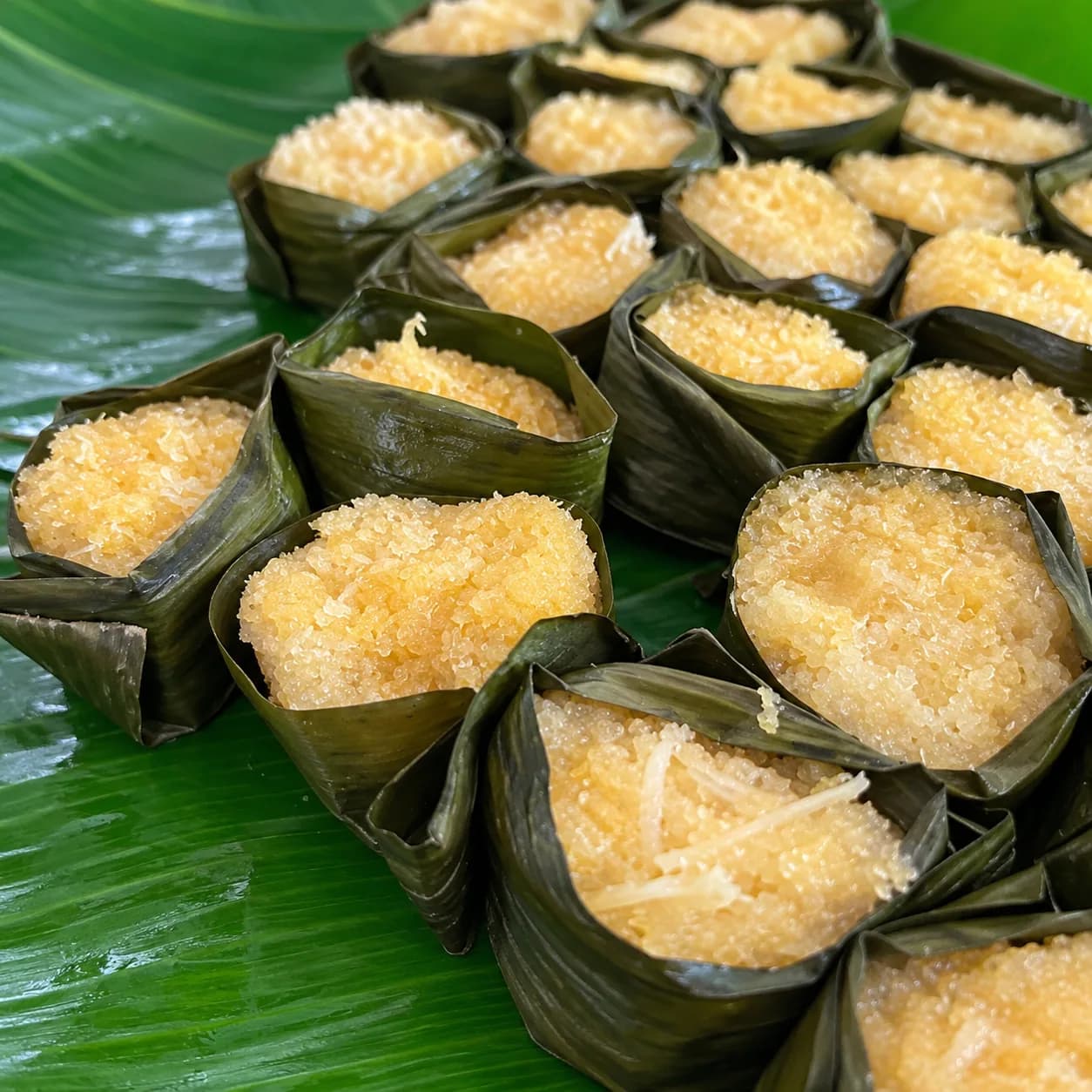
Puto Lanson
Steamed cassava cake sold warm from the bilao in Iloilo's markets, with grated coconut and muscovado.

Ibus
Sticky rice in coconut milk, packed into a coil of young palm leaf and steamed.
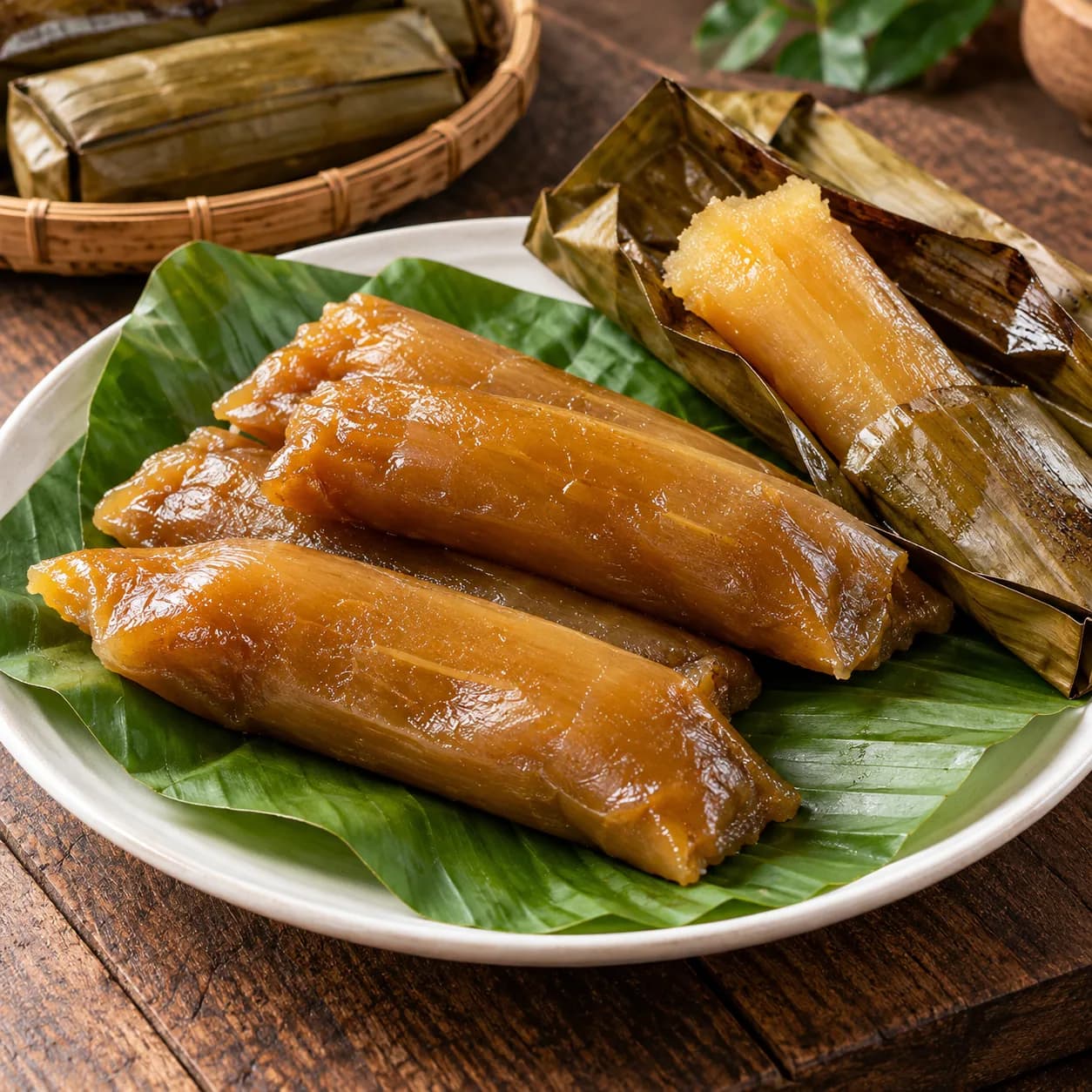
Alupi nga Kamoteng Kahoy
Grated cassava with young coconut and sugar, wrapped in banana leaves and steamed.
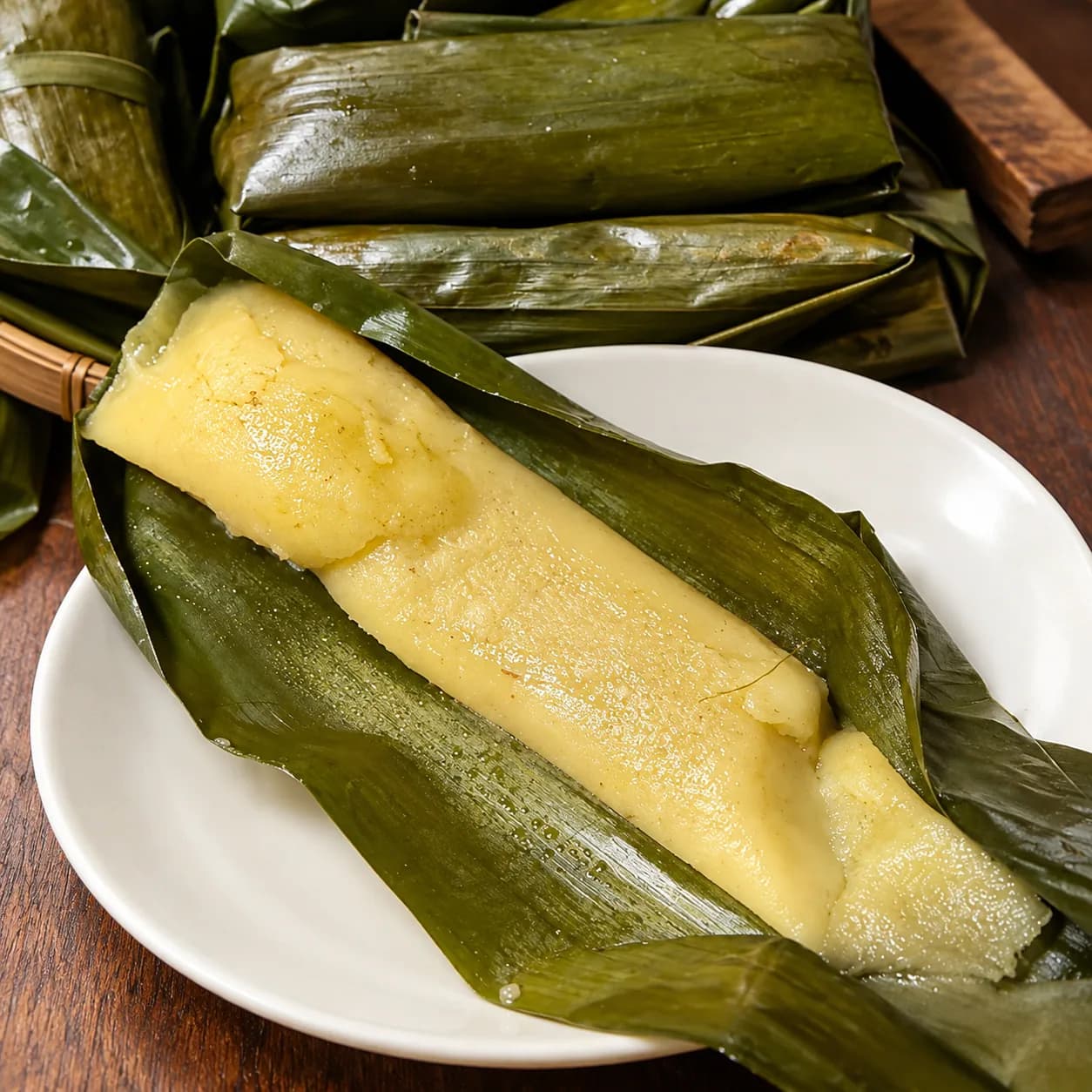
Alupi nga Pilit
The sticky rice version of alupi, softer and smoother than the cassava one.

Biko
Sticky rice in coconut milk and brown sugar with toasted coconut curds. In Iloilo it is also called suman.
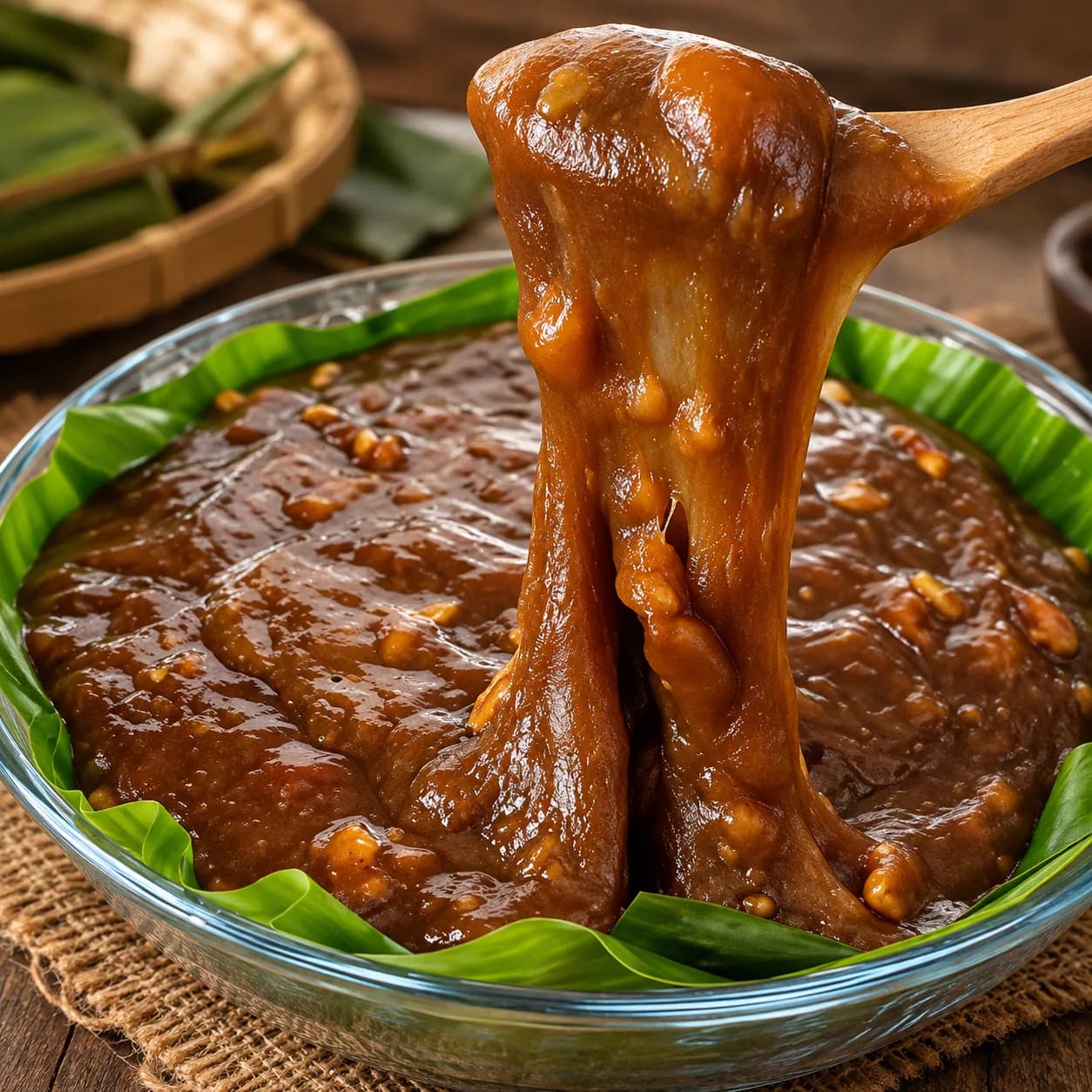
Kalamay Hati
A dark, glossy pudding of glutinous rice flour, coconut milk and muscovado.
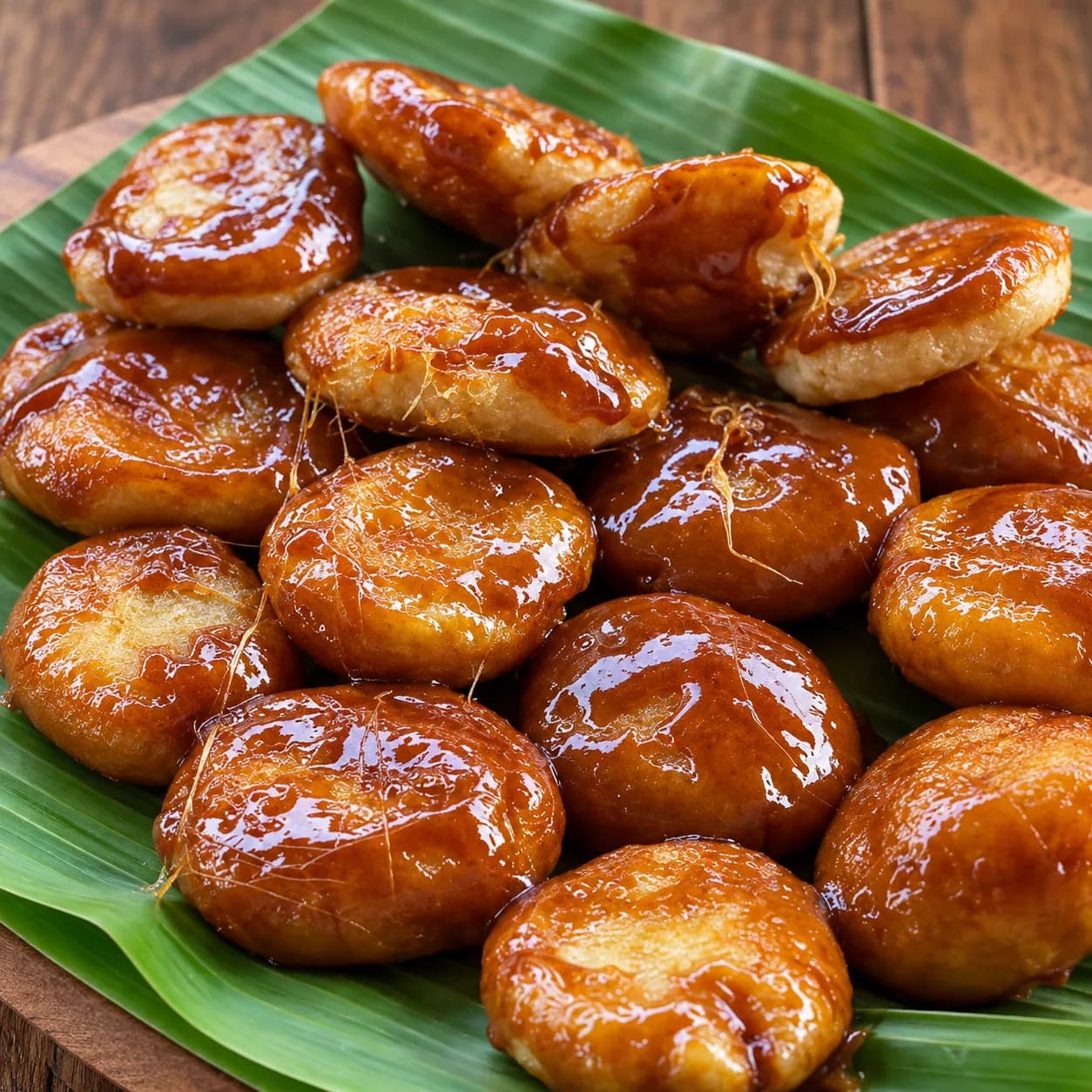
Bitso-bitso
Twisted ropes of rice dough, fried and coated in a muscovado syrup that dries into a crackly shell.
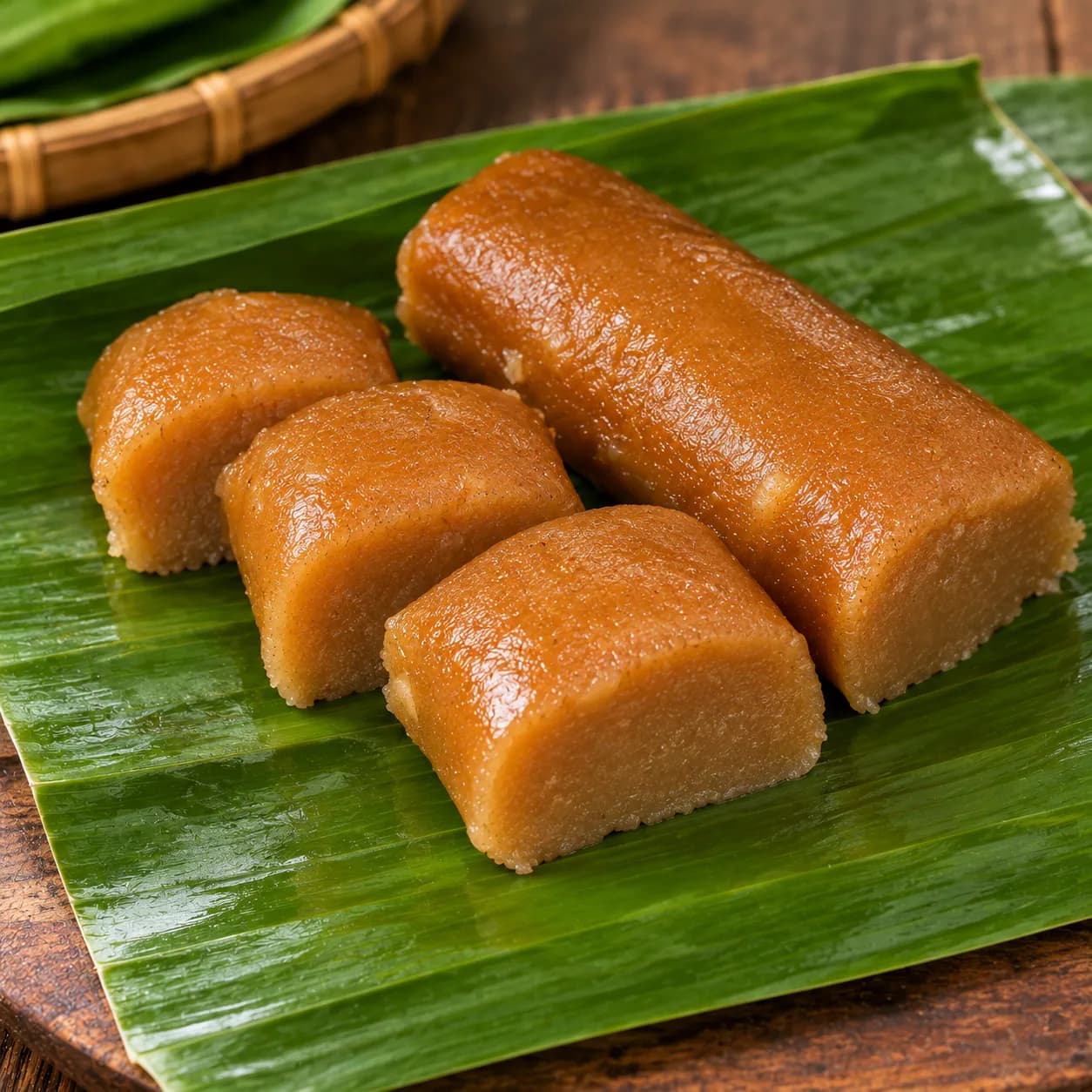
Bahi-bahi
Toasted pinipig mixed with grated young coconut and sugar, pressed into logs and wrapped in banana leaves.
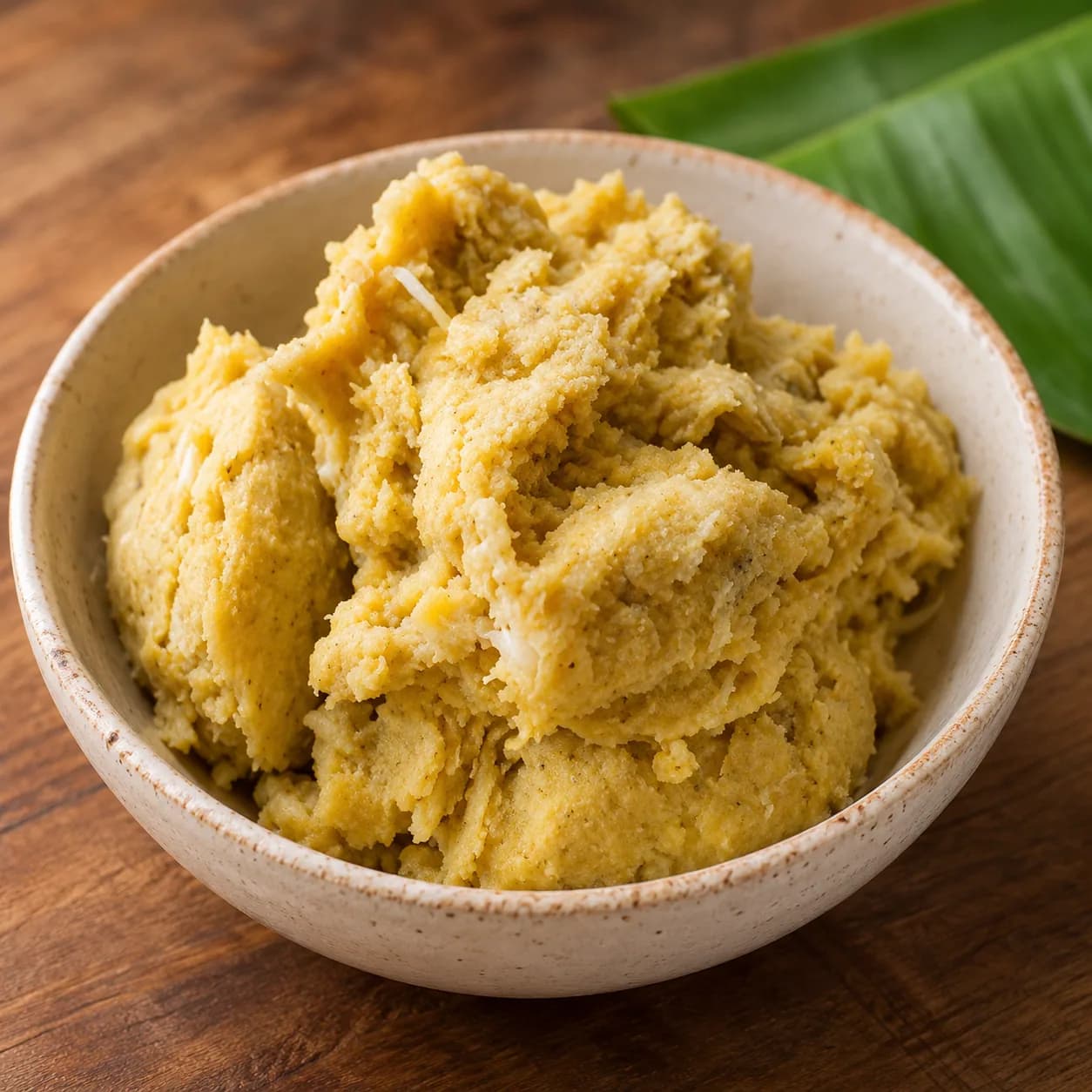
Nilupak nga Saging
Boiled saba bananas pounded smooth and mixed with coconut and sugar.
How we eat
Rice first
Everything is built around rice. Soups are eaten with it, and the sauce is meant to be spooned over it.
Merienda matters
Mid-afternoon is for kakanin, batchoy or a small bowl of something warm, and a visit is not a visit without it.
Feed everyone
Cook a little more than you need, because someone will drop by. This is the habit I grew up with in Negros.
Pasalubong
People travelling home from Iloilo or Bacolod bring boxes of bandi, piaya and barquillos for the family.
Questions about Ilonggo food
What is the difference between Ilonggo and Hiligaynon?
Hiligaynon is the name of the language. Ilonggo is the name of the people of Iloilo, and in everyday speech it is also used for the language.
Is Negrense food the same as Ilonggo food?
They are very close. Negros Occidental speaks Hiligaynon and was settled by Ilonggo families during the sugar boom, so the two share most of their dishes. Negros Oriental mostly speaks Cebuano and cooks closer to Cebu.
Why is Iloilo City called a city of gastronomy?
Iloilo City is the first UNESCO Creative City of Gastronomy in the Philippines, recognized for its food culture, from La Paz batchoy and Molo soup to its markets, kakanin and home cooks.
Is Ilonggo food spicy?
Generally not. Ilonggo cooking leans mild, sweet and sour, and chili is served on the side instead of cooked in.
What should I try first?
La Paz batchoy if you like noodle soup, chicken inasal for the grill, and kadyos baboy langka or pochero for a home-style stew.
More guides
All guides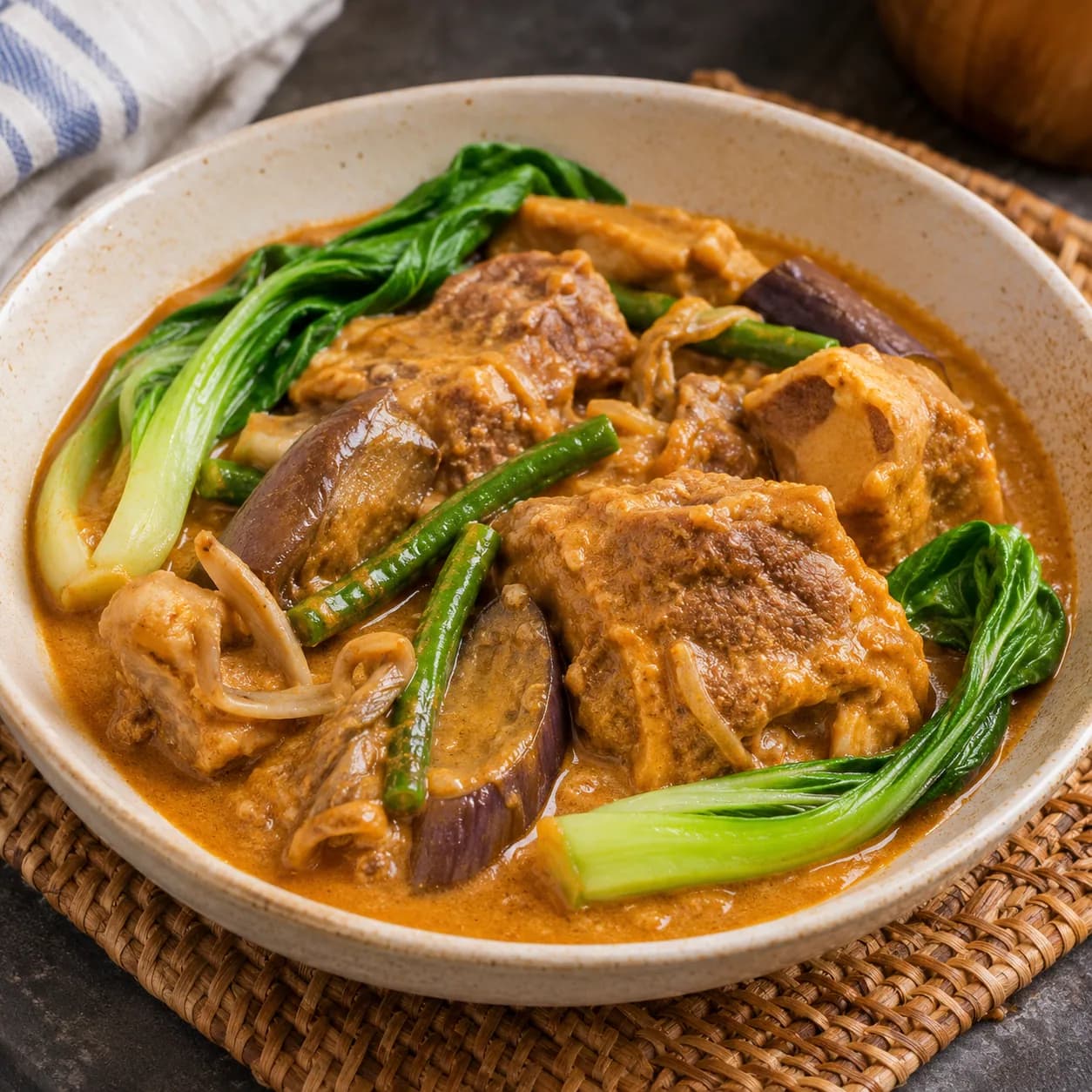
34 dishes
Filipino food
What Filipino cuisine is, its flavors, history and regions, and 34 classic dishes to try.
19 dishes
Filipino desserts
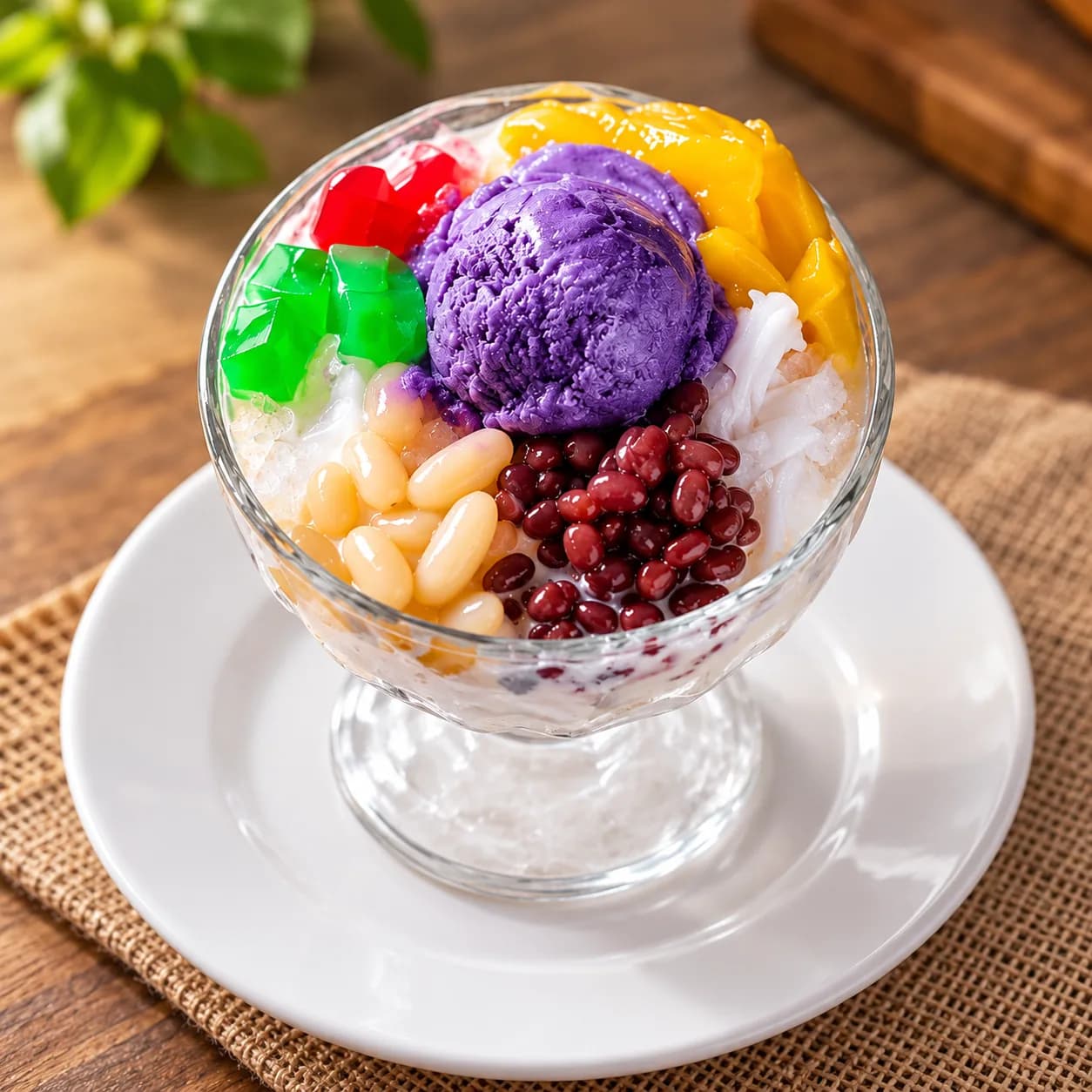
Halo-halo, leche flan, ube and the rice cakes called kakanin: 19 sweets and when they're eaten.
10 dishes
Filipino breakfast
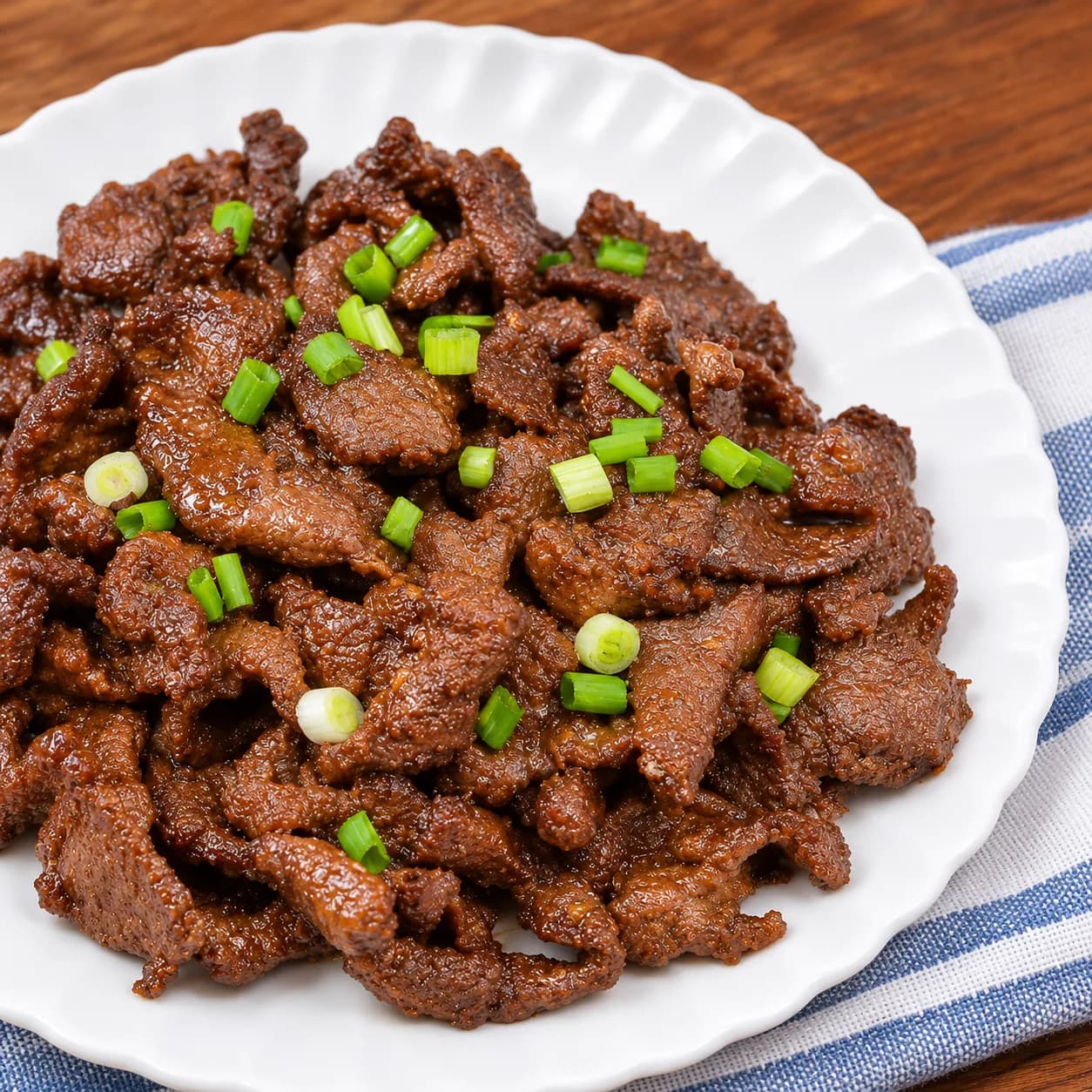
The silog plate, cured meats, fried fish and rice porridge: 10 ways Filipinos start the day.
14 dishes
Filipino soups
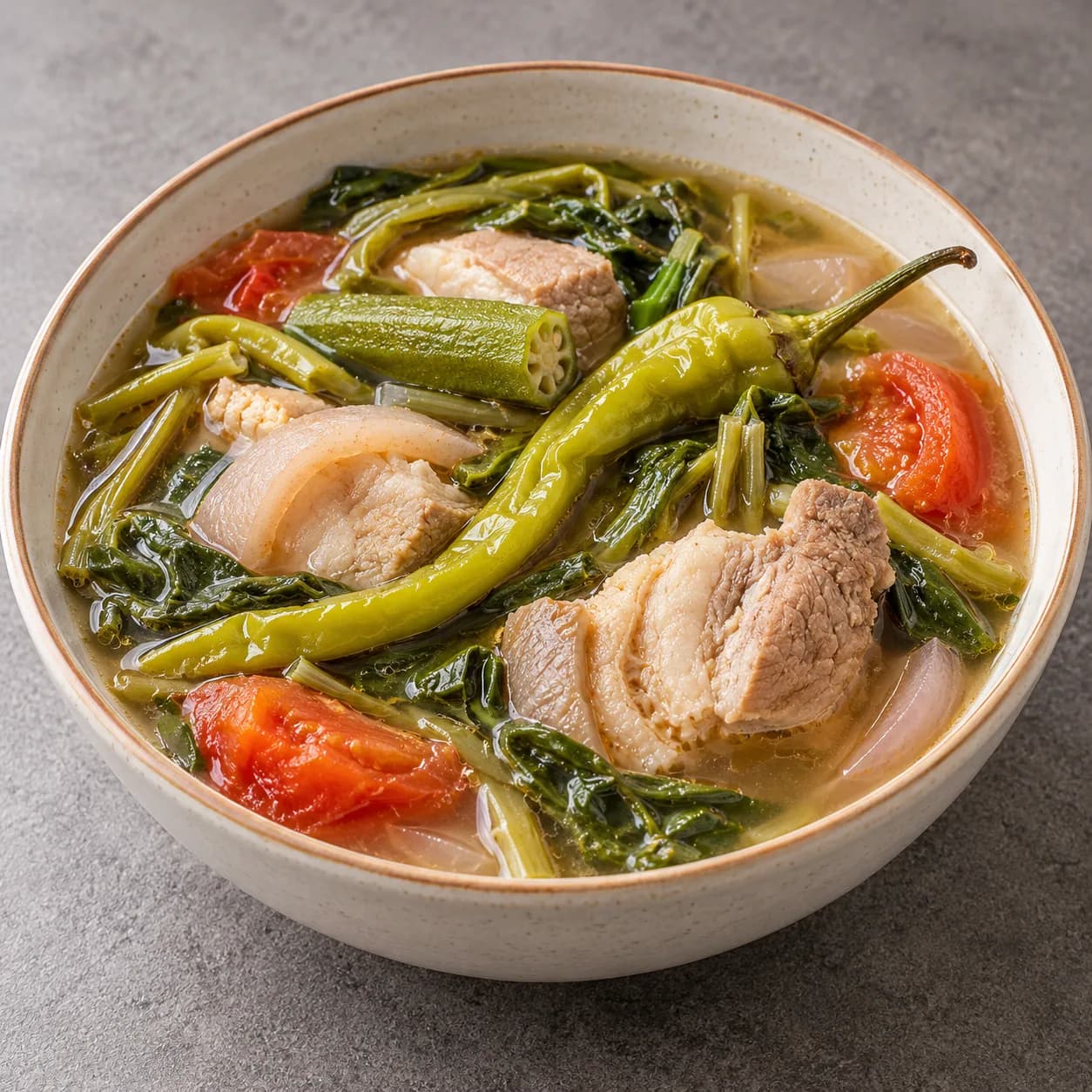
Sour sinigang, gingery tinola, rich bulalo and more: 14 soups and how they're eaten.
38 dishes
Noche Buena food
The 38 dishes on a Filipino Noche Buena table, plus the Simbang Gabi foods that come before it.
8 dishes
Kalag-kalag food
Valenciana, ibus, kalamay hati and more: the 8 dishes cooked for kalag-kalag, or Undas, in Western Visayas.