Nilupak nga Saging: Filipino Mashed Banana with Coconut
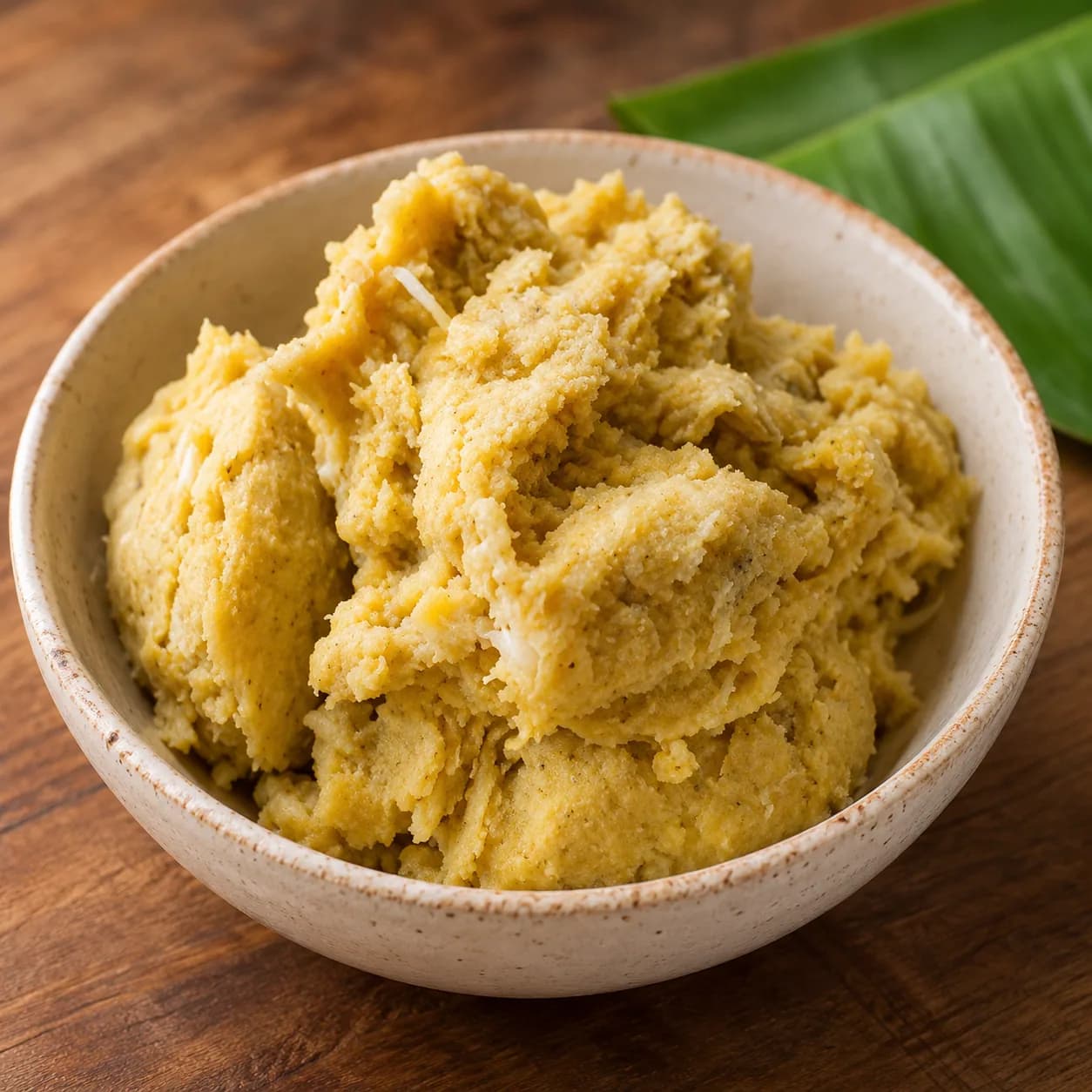
Nilupak nga saging (also spelled linupak nga saging in Hiligaynon) is a simple Filipino snack, a nilupak made from bananas: saba bananas boiled, pounded until smooth and sticky, then mixed with fresh grated coconut and a little sugar. It is soft, mildly sweet and filling, and it needs no oven.
About Nilupak nga Saging
Nilupak is the Filipino name for a pounded sweet: root crops or bananas are boiled and then pounded in a mortar until they turn into a smooth, dense paste. In Western Visayas, in Hiligaynon and Kinaray-a, the same dish is called linupak. Nga is the Ilonggo word that links the dish to its main ingredient, so nilupak nga saging means pounded banana. You may also see it as nilupak na saging in Tagalog, or simply nilupak na saba.
It is a farm-kitchen snack: bananas from the backyard, coconut from the tree and a spoon of sugar, eaten in the afternoon with coffee. The same method works with cassava (kamoteng kahoy) and other starchy roots. The finished mash is traditionally served on a banana leaf, with a topping of freshly grated coconut and sugar.
Ingredient notes
- Saba banana: the cooking banana of the Philippines. Choose firm bananas that are just ripe or still slightly green, so the mash stays thick and not too sweet.
- Grated coconut: fresh, from a mature coconut, gives the best flavor. Frozen grated coconut is a good substitute.
- Muscovado sugar: adds molasses sweetness. Brown sugar works too.
- Salt: a small pinch brings out the sweetness.
- Banana leaf: for serving, and to add a faint grassy aroma.
Tips for the best Nilupak nga Saging
- Boil the bananas until completely soft. A fork should slide in with no resistance, otherwise the mash will be lumpy.
- Pound while the bananas are warm. They break down much more easily, and the mash turns smooth and sticky.
- Add the coconut in two parts. Mix half into the mash and use the rest as a topping, so you get both a creamy and a fresh flavor.
- Use a mortar and pestle if you can. A fork or potato masher works, but pounding gives the traditional dense, chewy texture.
- Taste before sweetening. Ripe saba is already sweet, so start with a little sugar and add more if needed.
What to serve with Nilupak nga Saging
Serve it with hot coffee, salabat (ginger tea) or hot chocolate as an afternoon snack. A bit of grated coconut and a spoonful of sugar on top is the traditional finish.
Variations and substitutions
- Cassava: boil and pound kamoteng kahoy the same way for a classic nilupak, the version also called nilupak na kamoteng kahoy.
- With ground peanuts: stir in a handful of crushed peanuts for crunch.
- Richer: work in a spoonful of butter or coconut cream while the mash is warm.
- Sweeter: use very ripe bananas or add more sugar.
Storing and reheating
Nilupak is best fresh. Store leftovers in a covered container in the refrigerator for up to 2 days and warm briefly in the microwave or steamer before serving. The mash firms up when cold.
Frequently asked questions
What is nilupak?
Nilupak is a traditional Filipino sweet of boiled root crops or bananas pounded into a smooth paste and topped with grated coconut and sugar. Nilupak nga saging is the banana version.
What is the difference between nilupak and linupak?
They are the same dish. Nilupak is the name used in most of the Philippines and linupak is the Hiligaynon and Kinaray-a spelling.
Can I use regular bananas?
Cavendish bananas are too soft and sweet. Saba holds its structure and makes a firmer mash.
Do I need a mortar and pestle?
No. A sturdy fork, potato masher or a few pulses in a food processor can break the bananas down, though pounding by hand gives the best texture.
What is nilupak made of?
This nilupak is made of boiled saba bananas, fresh grated coconut, muscovado sugar and a pinch of salt. Other versions use cassava, sweet potato or taro.
Can I make it vegan?
Yes, it already is, as long as you skip the butter.
More Filipino recipes you might like
Ube Halaya, Biko and Banana Cue.