Humba: Visayan Braised Pork Belly with Black Beans and Banana Blossom
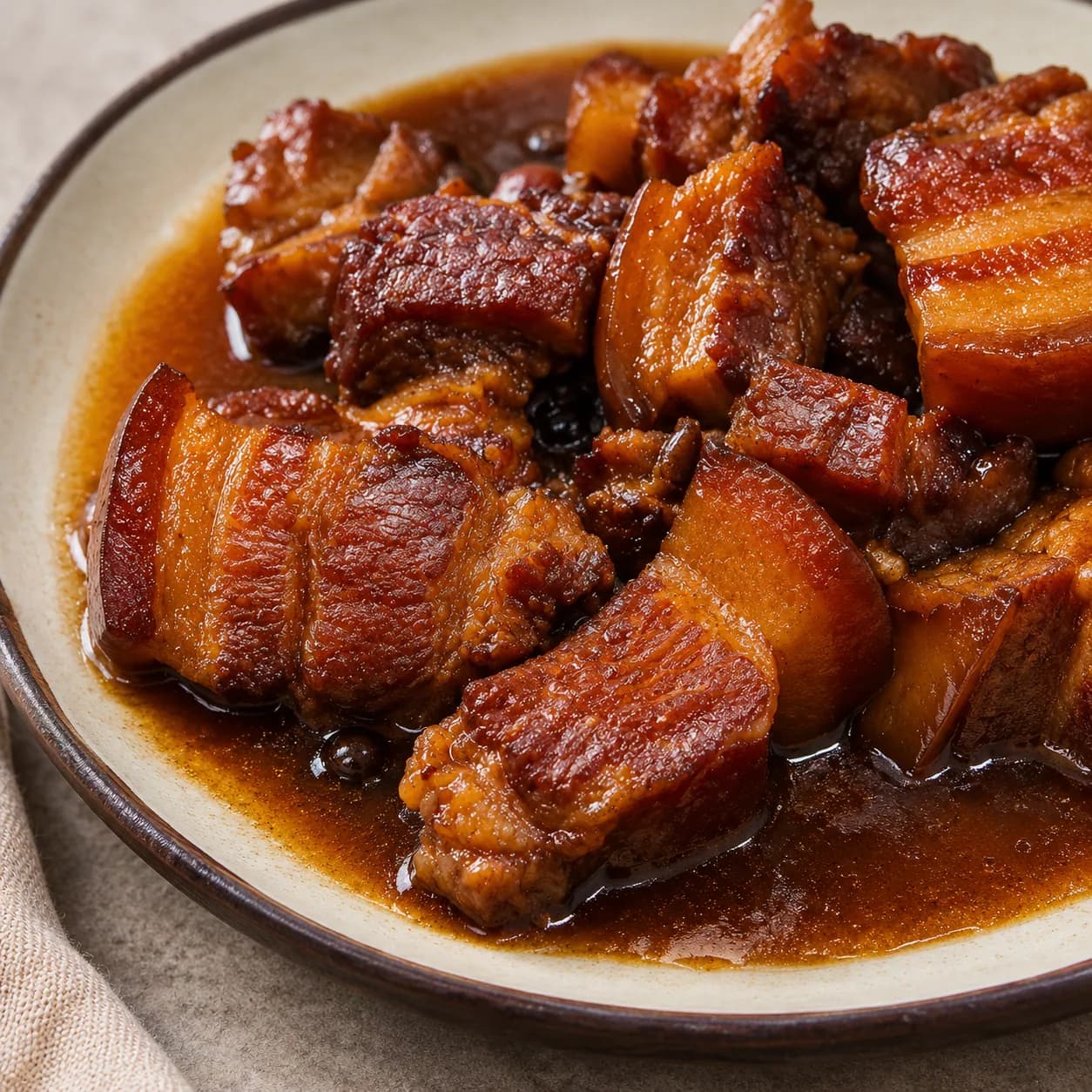
Humba is a Visayan pork belly braise cooked in soy sauce, vinegar, brown sugar and fermented black beans (tausi) until the meat is spoon-tender and the sauce turns dark, sticky and glossy. This humba recipe adds pineapple juice and dried banana blossom, serves 6 and takes about 2 hours 20 minutes, almost all of it simmering time.
Humba vs. pork adobo
Both are braised pork in soy sauce and vinegar, but they taste different.
| Humba | Pork adobo | |
|---|---|---|
| Sweetness | Sweet, from brown sugar and often pineapple juice | Little or none |
| Fermented black beans (tausi) | Yes, for deep savory flavor | No |
| Sauce | Dark, thick and sticky | Thinner, salty and sour |
| Typical extras | Banana blossom, hard-boiled eggs | Bay leaf, peppercorns, garlic |
| Cooking time | Long, slow braise | Shorter |
If you like adobo but want something richer and sweeter, humba is the next dish to try. For the sharper version, see Pork Adobo.
About Humba
Humba is a Visayan braised pork dish with a sweet, savory and slightly tangy sauce made from soy sauce, vinegar, brown sugar and fermented black beans (tausi). Pineapple juice or banana blossoms are sometimes added. It is similar to adobo, but darker, sweeter and richer, and it shares ancestry with Chinese red-braised pork.
The dish is cooked slowly until the pork belly is spoon-tender and the fat is soft and glossy, and the sauce reduces to a syrupy glaze. The fermented black beans add a deep, salty-savory note that sets humba apart from adobo. It is a Sunday and fiesta dish in the Visayas, and many families have their own version.
Ingredient notes
- Pork belly: gives the dish its richness. Cut it into thick cubes so they hold their shape through the long cook.
- Fermented black beans (tausi): provide umami and a distinctive savory depth. Rinse lightly if very salty.
- Brown sugar: balances the soy and vinegar and helps create the glaze.
- Soy sauce and vinegar: the same backbone as adobo, in different proportions.
Tips for the best Humba
- Brown the pork first. Browning builds flavor and gives the sauce a richer color.
- Simmer gently. A low simmer keeps the pork tender and the sauce from scorching.
- Add the sugar gradually. Taste as you go; humba should be savory-sweet, not candy-like.
- Reduce at the end. Cook uncovered until the sauce turns glossy and clings to the meat.
- Rest before serving. Like many braises, humba tastes better after a short rest or the next day.
What to serve with Humba
Serve humba with plenty of steamed rice, and consider a side of boiled eggs, fried saba bananas or a simple vegetable like steamed greens to balance the richness.
Variations and substitutions
- Pineapple humba: replace some of the water with pineapple juice for a fruitier sweetness.
- Less sweet: use less sugar for a result closer to Pork Adobo.
- Banana blossom: add dried banana blossoms in the last 20 minutes, a traditional Visayan touch.
- Pressure cooker: cook for about 40 minutes, then reduce the sauce on the stove.
Storing and reheating
Refrigerate for up to 5 days. The sauce thickens and the flavor deepens overnight. Reheat gently with a splash of water. Humba freezes well for up to 2 months.
Frequently asked questions
What is the difference between humba and adobo?
Humba is sweeter and darker, with fermented black beans and sugar, while adobo is tangier and focuses on vinegar and garlic.
How long does humba take?
Usually 1.5 to 2 hours of simmering for pork belly, or about 40 minutes in a pressure cooker.
What are tausi?
Fermented black soybeans used widely in Chinese and Filipino cooking for a salty, savory flavor.
Why is my humba too salty?
The black beans and soy sauce can be salty. Add a little water or sugar and simmer longer, and use less soy sauce next time.
More Filipino recipes you might like
Bagnet, Lumpia and Pork Estofado.