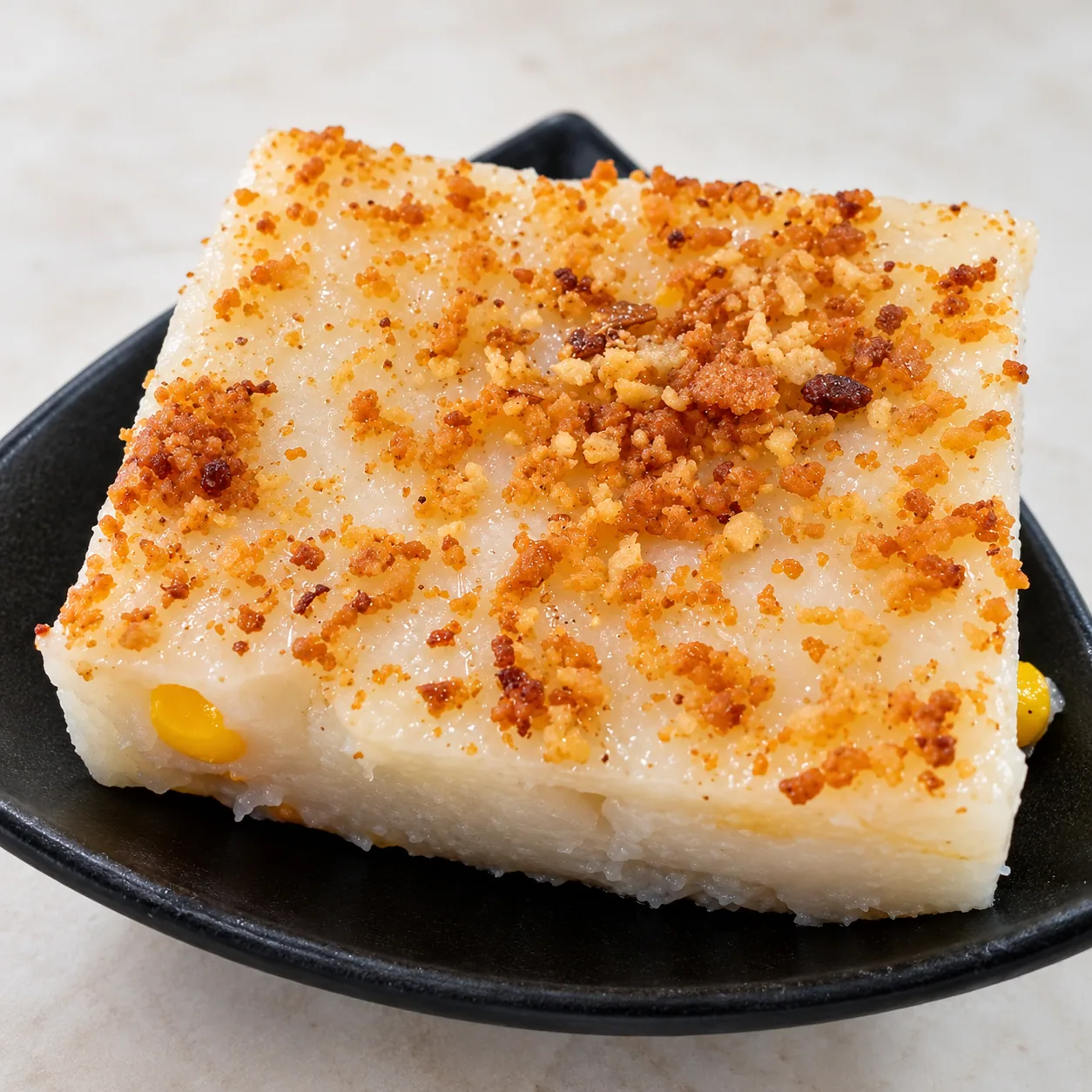
Ibus: Local Sticky Rice in Coiled Palm Leaves
Ibus (also spelled ibos) is a traditional Filipino kakanin made with glutinous rice, coconut milk, and salt. The rice is packed into coils of young coconut palm leaves and steamed until it becomes a chewy, gently salty rice cake. It is often enjoyed with muscovado sugar, ripe mango, or a cup of thick hot chocolate called sikwate.
In our local food tradition, ibus is also associated with family gatherings and Kalag-Kalag, the time when we remember loved ones who have passed away in early November.
From My Family's Kitchen
Ibus was my grandmother's favorite, and she always made it for Kalag-Kalag, our family's way of remembering loved ones who have passed away.
In our family, we prepare ibus as an offering for our departed loved ones. Unlike other families who bring food to the cemetery, we usually make our offerings at home. It is a simple tradition, but one that holds a special place in our hearts. Preparing these kakanin is our way of remembering the people who came before us and keeping their memory alive through the food we prepare and the traditions we continue.
For us, ibus is more than just a familiar local delicacy. It carries memories of my grandmother, our family gatherings, and the traditions passed down through generations. Every time we make it for Kalag-Kalag, it brings back a sense of connection to our roots and to the loved ones we miss.
These are the kinds of traditions that make Filipino food special. Beyond the ingredients and the way a dish is prepared, there is always a story behind it, often tied to family, remembrance, and the people who make a house feel like home.
About Ibus
Ibus is a type of suman, a Filipino rice cake made from glutinous rice. What makes it distinct is its traditional coiled palm-leaf wrapper. In our local cooking tradition, young coconut palm leaves are commonly used to form the coils. The leaves are wound around a stick, filled with rice, and secured using the leaf's own tip.
Making the coils takes practice. The leaves need to be flexible enough to shape and secure the rice without falling apart during steaming. In many families, this skill is passed down through generations.
Ibus is usually sold in pairs tied together, which is why some vendors also call it akap-akap, meaning "hugging."
The rice itself is not sweetened. Instead, the sweetness comes from the food served alongside it, such as muscovado sugar, ripe mango, or a cup of thick hot chocolate. This makes ibus a great choice for merienda or a simple dessert.
During Kalag-Kalag, ibus may be prepared alongside other traditional Filipino kakanin and dishes, depending on the family's customs and local traditions.
Ingredients and Notes
- Glutinous rice: Soak the rice before cooking so it cooks more evenly inside the tight leaf coils.
- Coconut milk: Adds richness and a creamy taste to the rice.
- Salt: Gives ibus its mild savory flavor, which pairs well with sweet dips and fruit.
- Coconut palm leaves: Young, flexible leaves are commonly used in our local preparation of ibus. They give the rice its traditional coiled shape and a subtle leafy aroma. Buri palm leaves may also be used where available.
Tips for Making the Best Ibus
- Soak the rice before cooking. This helps the grains absorb moisture and cook evenly.
- Partly cook the rice before filling the coils. Partially cooking the rice with coconut milk can make it easier to pack and helps it cook through during steaming.
- Fill the coils about three-quarters full. The rice needs room to expand as it cooks.
- Secure the leaf coils well. Tuck the leaf tip through the final turn to help keep the wrapper closed.
- Steam until the rice is fully cooked. The finished ibus should be tender and chewy, without a hard center.
What to Serve with Ibus
One of the best things about ibus is how well it pairs with simple accompaniments.
- Muscovado sugar: Dip the ibus in dark, rich sugar for a sweet and savory combination.
- Ripe mango: Serve with slices of ripe mango for a fresh, fruity contrast.
- Sikwate: Pair it with thick Filipino hot chocolate for a comforting merienda.
- Latik: Add toasted coconut curds for extra texture and a rich coconut flavor.
You can enjoy ibus warm or at room temperature, depending on your preference.
Variations and Substitutions
- Banana-leaf suman: If you cannot find coconut palm leaves, wrap the rice in softened banana leaves and shape it into logs. The result will be closer to other types of suman than traditional coiled ibus.
- Yellow ibus: Some cooks add a little turmeric to give the rice a yellow color.
- Ibus with latik: Serve with toasted coconut curds instead of sugar for a richer topping.
Storing and Reheating
Keep freshly cooked ibus wrapped in its leaves while it cools.
For food safety, refrigerate leftovers within two hours of cooking and store them in an airtight container. They can generally be kept in the refrigerator for up to four days.
To reheat, steam the ibus for about 10 minutes, or until heated through. Add more steaming time if the rice is still firm in the center.
Avoid leaving cooked rice at room temperature for long periods, especially in warm weather.
Frequently Asked Questions
What is the difference between ibus and suman?
Ibus is a type of suman. The main difference is its traditional coiled palm-leaf wrapper, which gives it a distinct shape and appearance.
What leaves are used to make ibus?
In our local cooking tradition, young coconut palm leaves are commonly used to make the coils. Buri palm leaves may also be used in other preparations.
Why do families prepare ibus for Kalag-Kalag?
Family customs vary, but some families prepare traditional food as an offering to remember loved ones who have passed away. In our family, ibus is part of this tradition, and we usually make our offerings at home rather than bringing them to the cemetery.
Is ibus sweet?
Traditional ibus is usually mildly salty rather than sweet. Its sweetness comes from accompaniments such as muscovado sugar, ripe mango, or hot chocolate.
Why is my ibus hard in the middle?
The rice may not have soaked long enough, or the ibus may need more steaming time. Make sure the rice has enough moisture and avoid packing it too tightly into the coils.
More Filipino Recipes You Might Like
If you enjoy traditional Filipino kakanin, try these recipes next: Biko, Puto and Bibingka
These familiar rice cakes are a lovely way to explore the flavors and food traditions found in Filipino homes.