Bahi-bahi: Ilonggo Toasted Rice and Coconut Logs
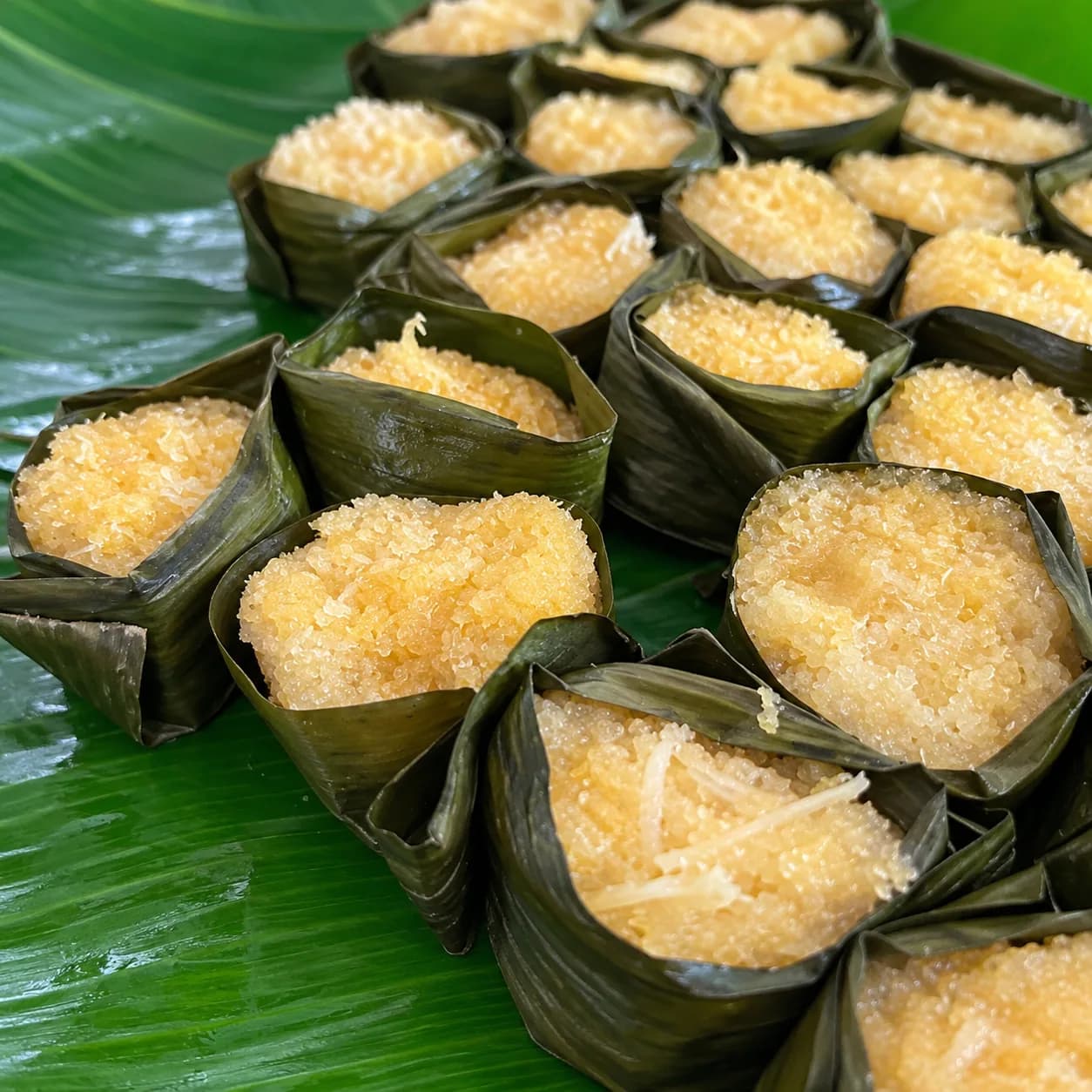
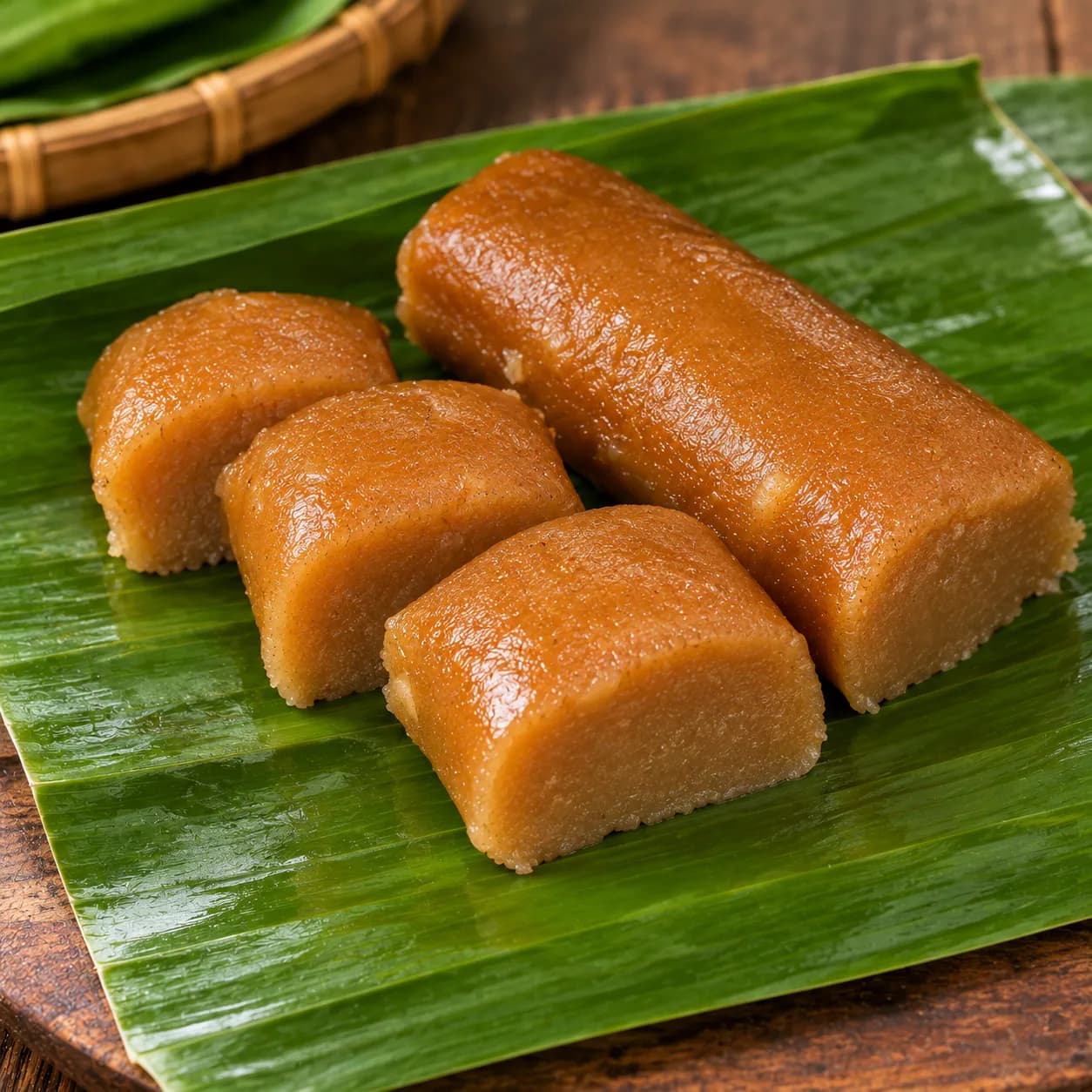
In Iloilo, when All Saints' Day comes — Undas in Tagalog, Kalag-Kalag in Hiligaynon — families bring bahi-bahi to the cemetery. It is a kakanin made from toasted glutinous rice ground fine and mixed with freshly grated young coconut and sugar, then pressed into firm logs or small patties and wrapped in banana leaves. You make it to share: the Ilonggo tradition of pag-ambit — communal giving and partaking — is baked into the recipe itself, which is too labor-intensive to make alone and designed to be distributed freely at the graveside to family, neighbors and strangers.
About Bahi-bahi
The ingredients are simple: pinipig (toasted glutinous rice), young coconut, sugar, banana leaves. The technique is minimal — toast, grind, mix, shape. But the context is everything. Bahi-bahi is almost exclusively made during the two-day Undas observance in Panay and Negros, and almost never at any other time. Families cook together in the days before, grinding the rice by hand or in a blender and grating fresh coconuts the morning of, because young coconut sours quickly once grated. The logs hold their shape for the duration of the cemetery vigil without refrigeration — the low moisture content of the toasted rice makes them shelf-stable enough for the all-night sit-with-the-dead (pagpuyat sa patay) that is central to Undas in Western Visayas.
What you are toasting when you toast the pinipig is not just the rice — you are developing a nutty, slightly smoky flavor that raw or steamed glutinous rice does not have. The coconut provides the binding fat that holds everything together. No water, no eggs, no cooking beyond the initial toasting.
Ingredient notes
- Pinipig (toasted young glutinous rice): available in Filipino grocery stores pre-toasted. If using un-toasted pinipig, toast it yourself in a dry pan for about 10–15 minutes over low heat until golden and nutty-smelling. The toasting is what gives bahi-bahi its characteristic flavor.
- Young coconut meat (buko): freshly grated is essential — the moisture and natural oils from fresh coconut are what bind the ground rice. Pre-packaged desiccated coconut will not work; it lacks the fat and moisture.
- Sugar: plain white or brown; some families use muscovado for a deeper, molasses-tinged sweetness.
- Banana leaf: the traditional wrapper. Wilt the leaves briefly over a flame or in hot water to make them pliable before wrapping.
Tips for the best Bahi-bahi
- Grate the coconut on the day you make it. Young coconut sours within hours at room temperature once grated. Do not prepare it the night before.
- Toast the rice slowly on low heat. Rushing on high heat burns the outside of the grains while leaving the center raw — you want an even golden color and a nutty smell throughout. Stir constantly.
- Grind finely but not to powder. Pinipig ground too coarse gives a gritty texture; ground too fine becomes paste-like. Aim for a coarse flour consistency, like very fine breadcrumbs.
- Do not add water. The coconut provides all the moisture needed. Adding water makes the mixture wet and soggy and prevents the logs from holding their shape.
What to serve with Bahi-bahi
Bahi-bahi is eaten as a handheld snack at Undas cemetery vigils, paired with barako (strong Filipino coffee) or sikwate (native hot chocolate made from tablea). It is also served at fiesta tables, though outside of Undas it is a nostalgic rarity in Iloilo. Eat it the day it is made or within a day; the coconut freshness fades quickly.
Variations and substitutions
- With muscovado: replacing white sugar with muscovado gives a deeper, molasses-forward sweetness that pairs well with the nutty toasted rice.
- With arnibal: some families pour a thin muscovado sugar syrup over the shaped logs before serving, making them stickier and glossier.
- Coconut leaf wrapping: some households use young coconut leaflets instead of banana leaf, imparting a different aromatic note.
- Bugas-bugas: a related Ilonggo kakanin made alongside bahi-bahi during Undas, but without the toasting step.
Storing
Best eaten on the day it is made. The coconut flavor fades and can sour after 24 hours. Store at room temperature wrapped in banana leaf for up to a day, or refrigerate for up to 2 days.
Frequently asked questions
What does bahi-bahi taste like?
Nutty from the toasted rice, mildly sweet, and fresh from the coconut. The texture is dense and slightly dry-chewy — similar to Japanese mochi made with toasted rice, or a very dense energy bar. It is not sweet in the way of a cake or cookie.
Why is it made for All Saints' Day?
The Ilonggo tradition of pag-ambit — sharing food with family, neighbors and the poor at the cemetery — calls for food that can be made in large quantities, carried to the cemetery, and distributed throughout a long vigil without refrigeration. The low moisture content of toasted-rice kakanin makes bahi-bahi ideal.
Can I make it without pinipig?
Pinipig is glutinous rice that has been toasted and pounded flat — it is the specific ingredient that gives bahi-bahi its flavor. If unavailable, toast your own sticky rice kernels, cool, and grind them. The result will be similar though the texture is slightly different.