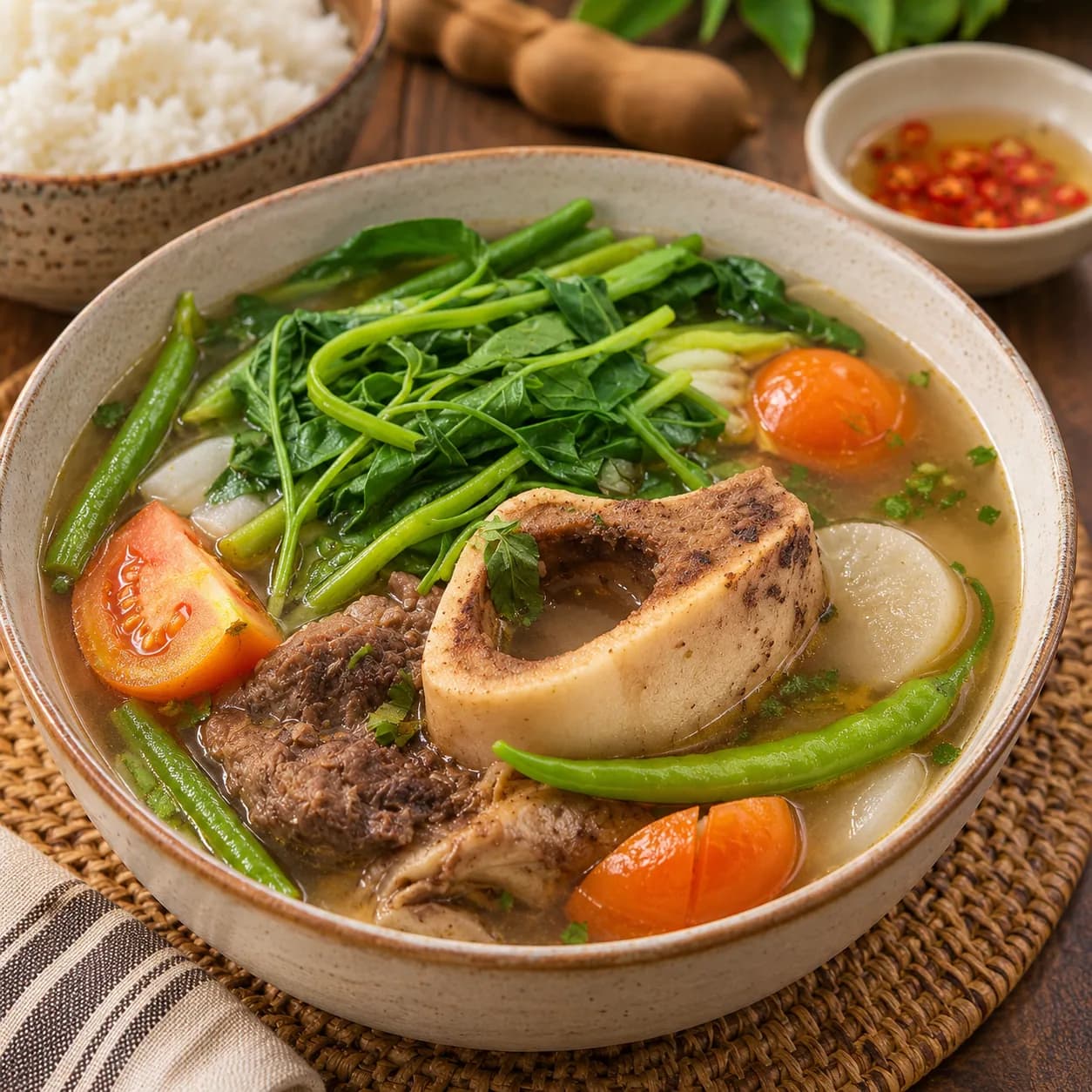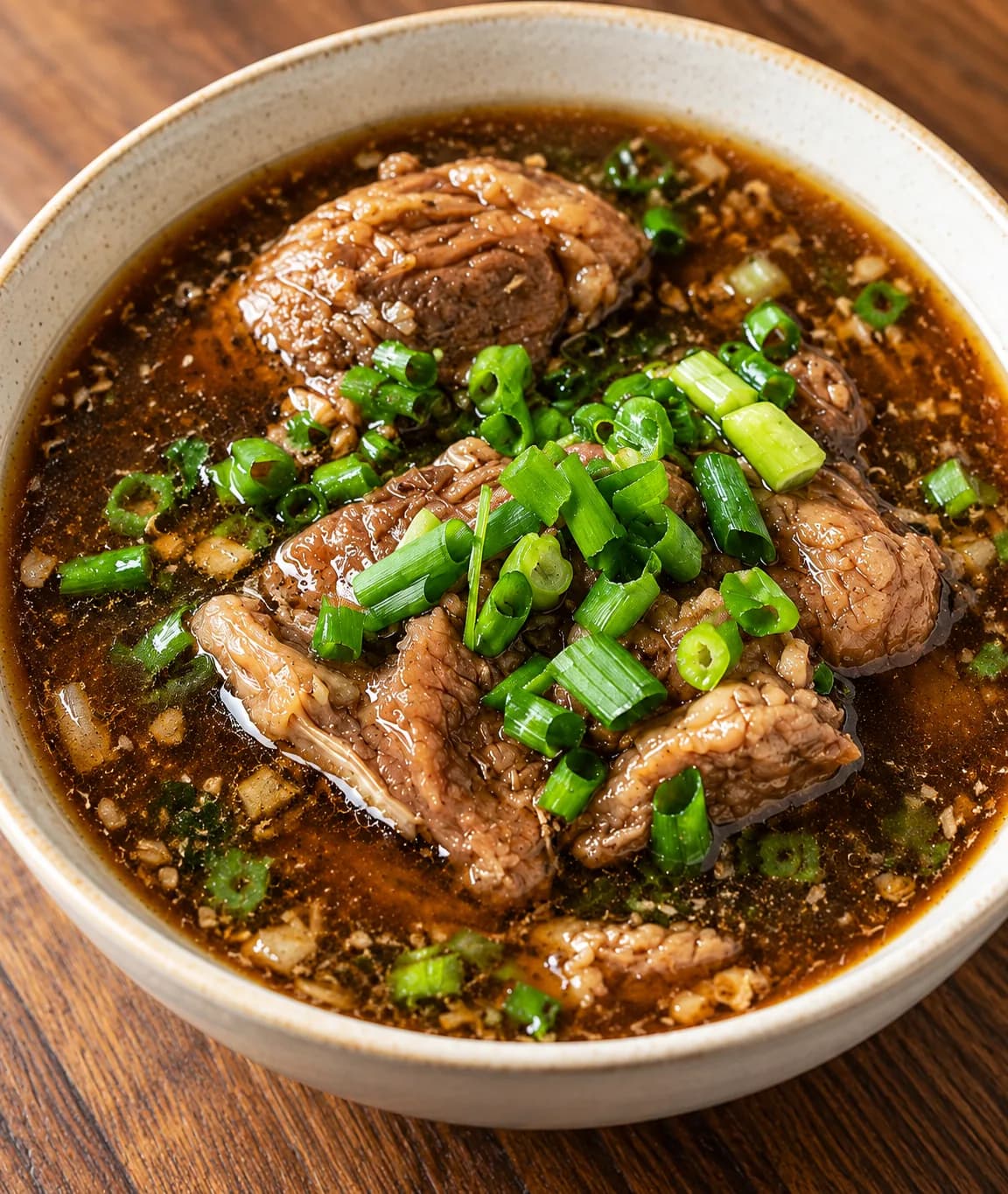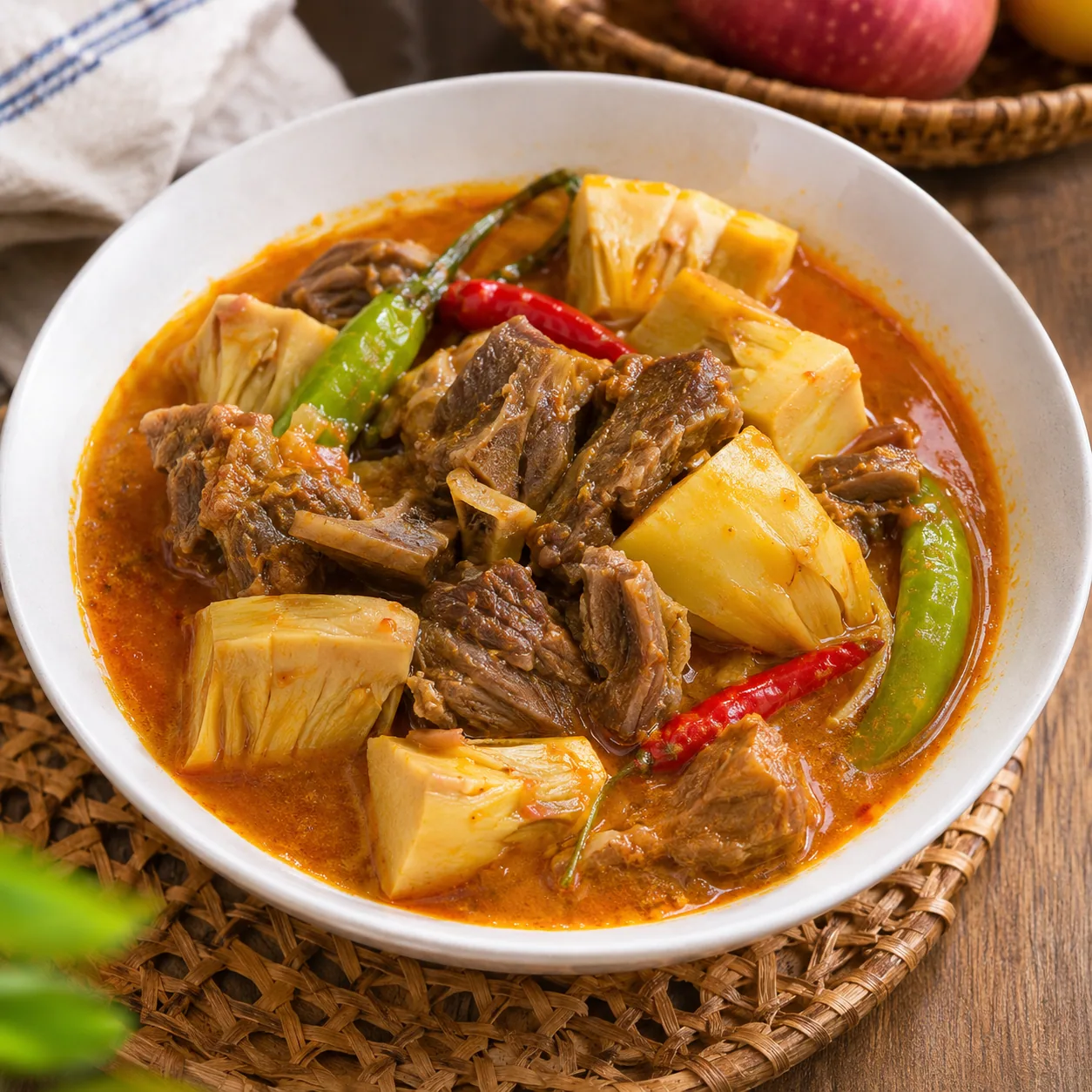
Bacolod Kansi: Beef Shank Soup with Batwan and Green Jackfruit
Kansi is a Negros beef soup: shank on the bone and young green jackfruit in an orange-red broth, soured with batwan and scented with lemongrass and annatto. It sits somewhere between bulalo and sinigang, with a color and a fragrance that neither of them has.
About Kansi
Kansi (also spelled cansi) is a classic of Bacolod, in Negros Occidental, and it is cooked just as often across the water in Iloilo and the rest of Panay. People call it the Ilonggo answer to bulalo and sinigang, but it is its own soup. The beef shank gives the body, and the marrow melts into the broth. The jackfruit, picked while it is still green, adds a meaty, slightly starchy bite. And batwan (also written batuan), a small green fruit native to Western Visayas and a relative of the mangosteen, gives a sourness that is rounder and softer than tamarind.
Annatto oil colors the broth and adds a light, earthy note, and lemongrass lifts it. Kansi is eaten piping hot at lunch or dinner, with steamed rice and a dip of patis (fish sauce) with calamansi and crushed chili.
If you know Bulalo or Sinigang na Baka, kansi will feel familiar and then not. Batwan also sours Kadyos, Baboy at Langka, so the two soups are neighbors on the Ilonggo table.
In some other parts of Negros, people simply call kansi nilaga. Do not expect the plain, clear broth that name means elsewhere in the Philippines: this soup is sour and orange.
The key ingredient in kansi is batwan. The batwan tree (Garcinia binucao) grows wild in the forests of Western Visayas, particularly on the islands of Negros (including Negros Occidental) and Panay (Iloilo, Antique, Capiz and Aklan). That is why this sour soup belongs so firmly to the region.
If you visit Bacolod City, you will find many restaurants that serve authentic kansi. It is worth ordering a bowl where it is made.
Why this Kansi recipe works
- Boil first, then simmer. Ten minutes of hard boiling with the shank pushes the scum out, and you pour it off. That is what keeps the broth clear and clean tasting.
- The garlic and annatto oil are cooked first. Fried in the hot oil, the garlic turns sweet and the annatto gives its color to the oil instead of leaving a gritty film on the soup.
- The jackfruit goes in before the batwan. The jackfruit needs time to soften, while the sour fruit loses its fresh taste if it boils for long, and some cooks say that adding it too early leaves the beef chewy.
- Fish sauce and salt are for the end. The broth reduces as it simmers, so you taste only after the sourness is in.
Ingredient notes
- Beef shank: bone-in, with the marrow. The collagen and marrow are what make the broth rich. Beef short rib works too, but the soup will be fattier.
- Batwan: fresh or frozen fruit is sold in Western Visayas, and some Filipino stores abroad carry frozen batwan or batwan powder. If you cannot find it, use 8 pieces of kamias with a spoonful of tamarind soup base, or a pack of sinigang sa sampaloc mix.
- Young green jackfruit (langka): it should be unripe, firm and not sweet. Canned jackfruit in brine is already soft: drain, rinse and give it only 5 minutes.
- Annatto oil: warm 3 tablespoons of annatto seeds (atsuete) in 4 tablespoons of oil over low heat until the oil is red, then strain. Annatto powder works too, at about 1 tablespoon.
- Lemongrass: pound the stalks so they release their oil, and tie them in a knot so they are easy to fish out.
- Long green chili: siling haba, added whole for aroma. Add bird's eye chili only if you want heat.
Tips for the best Kansi
- Cut the shank into thick rounds. About 4 cm thick, so the meat holds on the bone and the marrow stays inside until it softens.
- Skim the pot in the first 15 minutes. After that, keep the soup at a gentle simmer. A hard boil clouds the broth and toughens the meat.
- Be patient with the shank. In a regular pot it takes 2 to 2 and a half hours; a pressure cooker does it in about 40 minutes. It is ready when a fork goes through without resistance.
- Add the batwan last, and squeeze some. Press a few fruits against the side of the pot to release their juice, then taste. You want sour first and savory second.
- Serve with the dip. A saucer of fish sauce with calamansi and crushed chili is how kansi is meant to be eaten.
What to serve with Kansi
Steamed white rice, and nothing else is needed. The fish sauce dip is the usual condiment. If you want a vegetable on the table, a plate of sliced tomatoes or Adobong Kangkong is a good companion.
Variations and substitutions
- No batwan: use kamias with tamarind soup base, or a sinigang mix. The soup will be a little sharper and less round, but still kansi.
- Pressure cooker kansi: cook the shank with the onion, tomato and lemongrass for about 40 minutes, then add the jackfruit and souring.
- Without jackfruit: some cooks leave it out when it is hard to find, and enjoy the broth by itself.
- Leaner: chill the soup and lift the fat off before reheating.
Storing, freezing and reheating
Keep leftover kansi in a covered container in the fridge for up to 3 days. It freezes for about 2 months; the jackfruit gets softer after thawing. Reheat on the stove over medium heat until it simmers, and add a little water if it has reduced.
Frequently asked questions
What is kansi?
Kansi is a sour beef soup from Bacolod and the Ilonggo regions, made with beef shank, green jackfruit, lemongrass, annatto and batwan.
What is the difference between kansi and bulalo?
Bulalo is a clear, mild beef shank soup seasoned with salt or fish sauce, with corn and cabbage. Kansi uses the same cut, but the broth is soured with batwan and colored with annatto, and the vegetable is jackfruit.
What is batwan, and what can I use instead?
Batwan is a small green fruit native to Western Visayas, used to sour soups like kansi and KBL. Kamias with tamarind soup base, or sinigang mix, is the closest replacement.
Can I make kansi in a pressure cooker?
Yes. About 40 minutes for the shank, then add the jackfruit and sour fruit and simmer for a few minutes.
Is kansi the same as nilaga?
In some parts of Negros, people simply call kansi nilaga. The nilaga you find in the rest of the Philippines is a clear beef soup with no sourness, while kansi is soured with batwan and colored with annatto.