Bacolod Pinasugbo: Fried Banana Strips in Caramel and Sesame
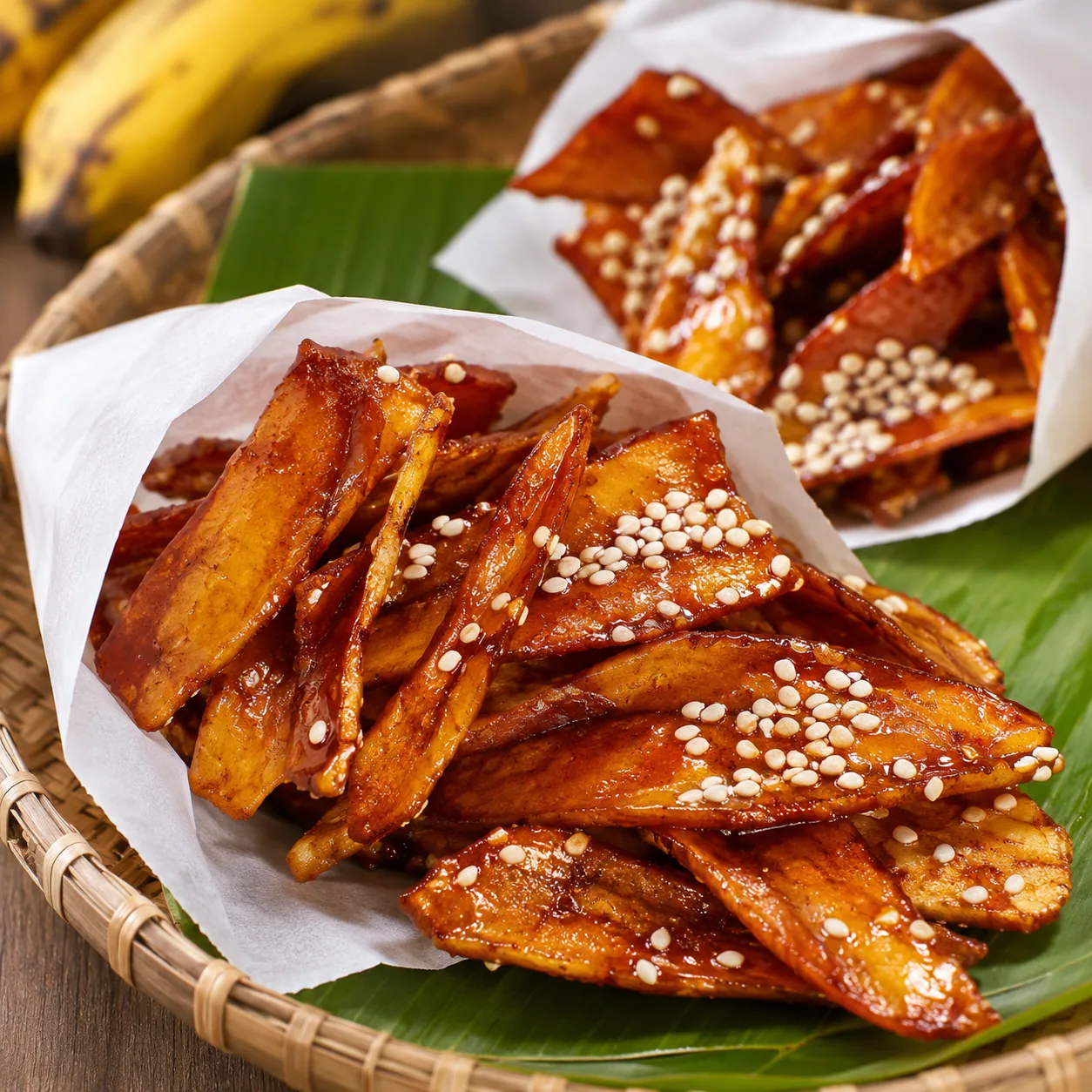
Pinasugbo is thin slices of unripe saba banana, deep-fried until crisp and then coated in caramelized brown sugar and sesame seeds. It is a classic pasalubong of Bacolod and Iloilo, usually sold in paper cones, and it is chewy and crunchy at the same time.
From my family's kitchen
I could not stop eating pinasugbo when I was a kid. I loved the simple taste of sweet banana with sesame seeds.
As a Hiligaynon speaker, I know the name as coming from sugbo, which means "to dip", and I guess that is because the banana slices are dipped into boiling oil.
About Pinasugbo
Pinasugbo is a Visayan snack made from just three things: green saba bananas, sugar and oil. It is sold at pasalubong stalls across Negros and Iloilo, and Bacolod is the place most people link it to. In Cebu a very similar sweet is called consilva, so you may see either name. It is not baked at all: the slices are fried, then dipped in syrup and left to set.
Some writers link the name to Sugbo, the old name of Cebu. In the oldest style, three slices were tied together with a strip of coconut leaf and dipped in melted sugar, and a few shops still sell it that way. Today most pinasugbo is made in a pot at home or in small kitchens, and sold in a paper cone with a coat of sesame seeds.
Eaten hot, the coating is soft and sticky. As it cools, it hardens into a crackling shell, and a day later the banana inside has softened a little and turned chewy. Many people say that stage is the best one.
Why this Pinasugbo recipe works
- The banana is unripe. Green saba has a lot of starch and very little sugar, so the slices fry up crisp instead of soggy.
- The slices soak in salted ice water first. The soak firms the slices and washes off the surface starch, so they fry crisper and do not stick together.
- The oil is hot enough. The slices are fried until deep golden, which drives out the moisture and keeps the sugar coat from turning them soft.
- The syrup is made separately. The sugar and water are cooked until thick and glossy, and the fried bananas are tossed in it only for a moment, so the sugar does not burn.
Ingredient notes
- Saba banana: it must be green and hard. Ripe or yellow saba is too soft and too sweet, and it burns. If you cannot find saba, use green plantains.
- Brown sugar: it gives a caramel flavor. Muscovado is richer and a bit darker.
- Sesame seeds: optional, toasted in a dry pan until light golden. Many old-style pinasugbo has none.
- Cooking oil: use a neutral oil with a high smoke point, enough for the slices to float.
- Salt: goes into the ice water, not onto the banana.
Tips for the best Pinasugbo
- Slice thinly and evenly. About 2 mm thick, lengthwise, with a mandoline if you have one. Thick slices stay soft in the middle.
- Dry the slices well. Pat them with a towel after soaking, because wet slices make the oil spit.
- Fry in small batches. Crowding the pan drops the oil temperature and the slices turn greasy.
- Keep the syrup on very low heat while you coat. It thickens fast. If it turns hard, add a spoonful of water.
- Work quickly. Lift the coated slices out with tongs and spread them on parchment or a silicone mat before the sugar sets.
What to serve with Pinasugbo
Eat it as a snack with coffee or hot tea, or pack it as a pasalubong in a tin or a paper cone. It also goes well crushed over ice cream or Halo-Halo.
Variations and substitutions
- Without sesame: leave it out for a plain caramel coating.
- Thicker pieces: cut the banana in thick lengthwise strips and fry a little longer, for a chewier result.
- Salty chips: skip the syrup and sprinkle a little salt, and you have banana chips.
- White sugar: caramelize white sugar for a lighter color and a cleaner sweetness.
Storing
Keep pinasugbo in an airtight tin with sheets of parchment between the layers. Humidity makes it soft and sticky, so do not leave it open. It keeps for several days, and it is chewier after a day or two.
Frequently asked questions
Is pinasugbo baked?
No. The banana slices are deep-fried, then coated in caramelized sugar. No oven is needed.
What is the difference between pinasugbo and banana chips?
Banana chips are fried slices, sometimes with a thin sugar glaze. Pinasugbo is coated in a thick layer of caramelized sugar and often sesame seeds, so it is sweeter and chewier.
What is consilva?
Consilva is the Cebuano name for a very similar fried banana and sugar sweet. In Negros it is called pinasugbo.
Why did my pinasugbo come out soggy?
The banana was probably too ripe, or the oil was not hot enough. Use green saba and fry until the slices are deep golden.
More Filipino recipes you might like
Banana Cue, Turon and Bukayo.