Bacolod Piaya: Muscovado Flatbread, Cooked on the Stove
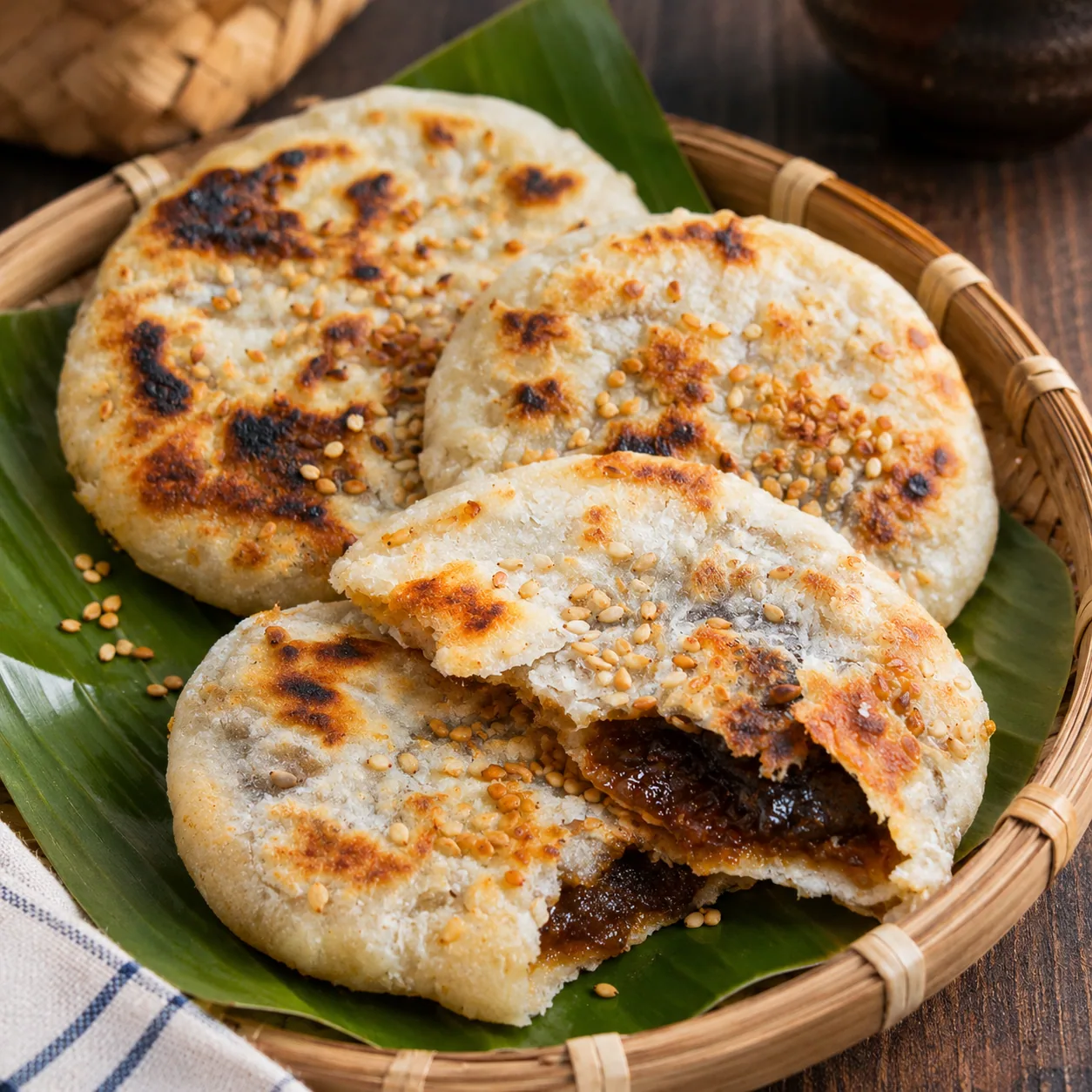
Piaya is a thin, flaky flatbread with a sticky muscovado filling inside, and sesame seeds on one side. It is the best-known pasalubong of Bacolod, and you make it at home without an oven: the filled discs are pressed flat and toasted in a pan.
From my family's kitchen
I grew up in the southern part of Negros Occidental, and piaya always reached us as pasalubong from relatives coming from Iloilo or Bacolod. When I was a kid, you saw it mostly peddled at bus terminals (Ceres, as we call the buses in Negros and Iloilo) and at jeepney terminals. Today you can buy it in almost any bakeshop.
The original flavor was just muscovado, or brown sugar, but now there are many. I think one of the best variations is ube.
About Piaya
Piaya (also written piyaya) is an unleavened flatbread from Bacolod, in Negros Occidental, a city surrounded by sugarcane fields. That is why the classic filling is muscovado, the dark, unrefined cane sugar of the island. The dough is made from flour, shortening, a little vinegar and cold water, with no yeast. Folding and rolling it with shortening gives it the thin, flaky layers.
Piaya is sold warm at stalls and in boxes at Bacolod's pasalubong shops, and it is also found in Iloilo, where it is spelled piyaya. Today you will also see it filled with ube halaya, mango jam or chocolate, but the one most people want is the original: a thin, crisp shell around a thick, almost fudgy muscovado center.
Some writers call piaya baked, but the home and market way is a hot, dry griddle or pan. That is what this recipe uses, so you need no oven.
Why this Piaya recipe works
- Shortening cut into the flour. It coats the flour and keeps gluten from forming, so the dough is crumbly and tender, not chewy.
- A spoon of vinegar in the water. The acid stops gluten from developing, so the dough stays easy to roll.
- Rolled with a fat layer, then sliced. Spreading shortening and rolling the dough up into a log creates the layers in every piece.
- A firm, small filling. The muscovado is bound with a little cornstarch so it does not run out when you flatten the disc.
- Low heat. Piaya is thin, and the sesame seeds and sugar scorch easily, so the pan must stay low.
Ingredient notes
- All-purpose flour: bread flour also works, but the dough will be a little tougher.
- Shortening: keep it cold. Lard is the traditional alternative and gives the best flavor. Butter or oil is less flaky.
- Muscovado sugar: dark brown sugar can replace it, but you lose the molasses flavor.
- Corn syrup: keeps the filling soft and stops the sugar from crystallizing.
- Cornstarch: thickens the filling. Flour works if that is what you have.
- Sesame seeds: pressed on one side, they are what you see on a piaya.
Tips for the best Piaya
- Do not overwork the dough. Knead it only until it holds together and is a little smoother. Kneading longer makes it chewy.
- Rest the dough and the rolls. The 20 minutes lets the flour absorb the water, and the short rests after rolling make it easier to flatten.
- Add the water to the filling slowly. The sugar melts as it takes on moisture, so mix and wait before you add more. It should form a soft ball.
- Flatten gently. Roll each filled ball as thin as you can without pressure, and a few small tears are fine.
- Cook in small batches. The discs puff a little and stick to each other if the pan is crowded.
What to serve with Piaya
Eat it warm, fresh from the pan, with hot tea, coffee or Salabat. It is also a good pasalubong, packed in a box once it is cool.
Variations and substitutions
- Ube piaya: mix 1 cup of Ube Halaya with ½ cup of cornstarch for the filling.
- No glucose: use light corn syrup, honey or more muscovado.
- With lard: swap the shortening for lard, for a more traditional taste.
- Plain dough: leave out the sesame, if you prefer.
Storing and reheating
Keep piaya in an airtight container at room temperature for 2 to 3 days. It softens as it sits, so reheat it in a dry pan over low heat for a minute on each side to make it crisp again.
Frequently asked questions
Is piaya baked?
Piaya is cooked on a dry griddle or pan, not in an oven. Some sources use the word baked, but the method is a hot surface.
What is the filling made of?
Muscovado sugar, a little water, cornstarch and corn syrup. It becomes a soft, sticky center that is like caramel inside the crust.
Why is my piaya hard and not flaky?
The dough was probably kneaded too much, or the shortening was warm. Knead only until it holds together, and keep the shortening cold.
What is the difference between piaya and hopia?
Both are filled flat pastries, but piaya is an unleavened dough cooked on a griddle with a muscovado filling, while hopia is a layered pastry that is usually baked, with mung bean or ube filling.
More Filipino recipes you might like
Ube Halaya, Bukayo and Biko.