Crispy Pork Sisig with Mayonnaise: Sizzling Pampanga-Style Recipe
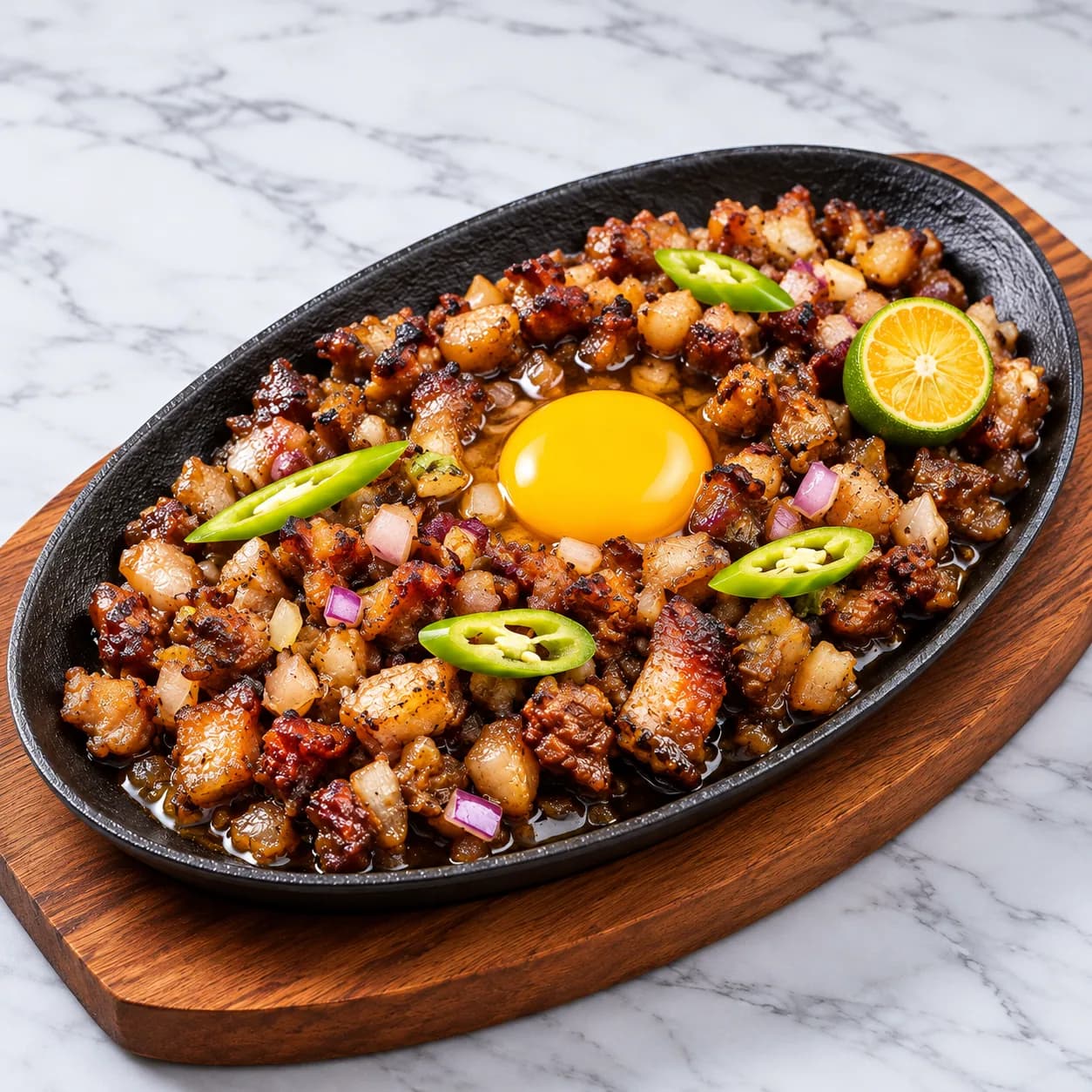
Sisig is a sizzling Kapampangan dish of chopped, crisped pork with onion, chili and calamansi. This crispy pork sisig recipe starts from pork belly, which is easier to find than pig's face, and finishes with mayonnaise and an egg on a hot plate. Plan about 1 hour and 35 minutes, most of it hands-off boiling and grilling.
About Pork Sisig
Sisig is a sizzling Filipino dish of chopped pork, onion, chili and calamansi, famously associated with Angeles City in Pampanga, often called the home of sisig. The name is thought to come from an old Kapampangan word meaning to snack on something sour. Traditional versions use boiled and grilled pig's face and ears, but home cooks commonly use pork belly, which is easier to find and still gives plenty of crunch and flavor.
What makes sisig special is contrast. The pork is boiled until tender, then grilled or broiled until the skin crisps, and finally chopped and tossed on a very hot plate with raw onion, chili and citrus. Every bite combines crispy edges, tender fat, sharp onion and the tang of calamansi. It is traditionally a pulutan (food that goes with drinks), but it is just as good over a bowl of steamed rice.
Ingredient notes
- Pork belly: has the right balance of crisp skin, fat and meat. Pork shoulder or a mix with pork ears gives a more traditional texture.
- Calamansi: gives the characteristic bright acidity. Lemon with a touch of lime is a fine substitute.
- Onion: red or white onion adds sharpness and crunch; chop it finely so it blends in.
- Chili: siling labuyo gives real heat, while long green chilies add flavor with mild spice.
Tips for the best Pork Sisig
- Dry the pork well. After boiling, pat the meat dry so the skin crisps properly under the broiler or on the grill.
- Chop to an even size. Aim for pieces about the size of a pea or small cube so each spoonful has both crisp and tender bits.
- Use high heat at the end. Sizzle the chopped pork on a preheated skillet or sizzling plate so the edges caramelize.
- Add citrus last. Squeezing calamansi on too early makes the pork soggy and dulls the sizzle.
- Taste and adjust. Balance salt, sour, spice and richness with soy sauce, calamansi, chili and a spoonful of mayonnaise or liver spread.
What to serve with Pork Sisig
Serve sisig sizzling with steamed rice, extra calamansi wedges and a cold drink. A raw egg cracked on top cooks from the heat of the plate and makes the dish richer.
Variations and substitutions
- Chicken sisig: use boiled and grilled chicken thighs for a lighter version.
- Tofu sisig: pan-fry firm tofu cubes until crisp for a vegetarian option.
- Seafood: see Bangus Sisig for a milkfish version.
- Creamy sisig: add mayonnaise or chicken liver spread for a richer finish.
Storing and reheating
Leftover sisig keeps for up to 3 days in the refrigerator. Reheat it in a hot skillet to bring back the crispiness; the microwave makes it soggy. The boiled pork can also be prepared a day ahead and chopped and sizzled just before serving.
Frequently asked questions
Is sisig really made from pig's head?
Traditionally yes, from parts of the pig's head. Today many cooks use pork belly, shoulder or a mix because they are easier to prepare.
How do I make sisig less greasy?
Use a leaner cut, trim some fat after boiling, and drain the chopped meat before sizzling.
Where does sisig come from?
Sisig is associated with Angeles City in Pampanga, though the dish is eaten throughout the Philippines.
Can I make sisig in an air fryer?
Yes. Air-fry the boiled pork at 200 °C until the skin is crisp, then chop and toss with the onion, chili and calamansi.
More Filipino recipes you might like
Lechon Kawali, Bagnet and Pork Steak.