Iloilo Tinuom nga Manok: Chicken Steamed in Banana Leaf
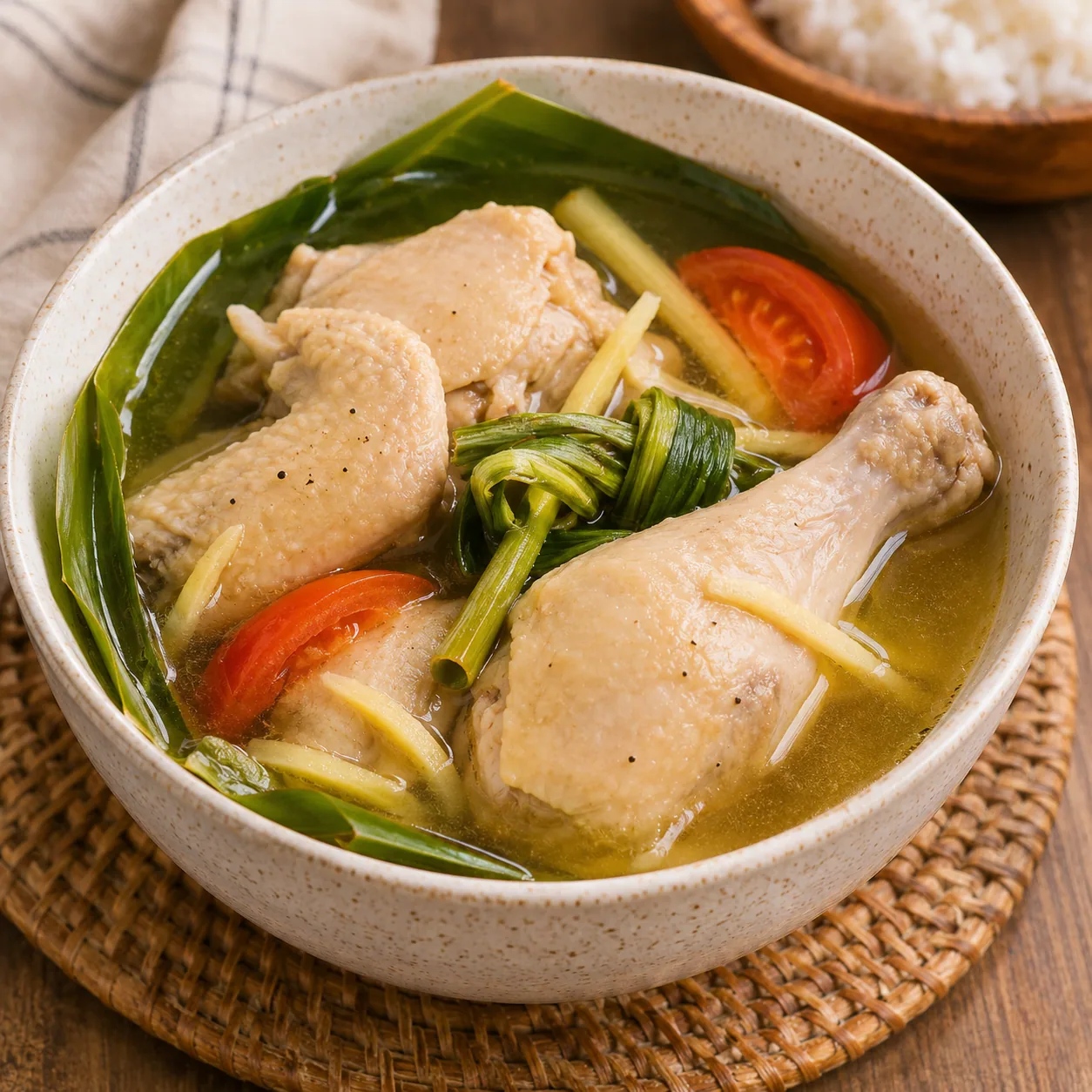
Tinuom is chicken wrapped in banana leaf with tomato, onion, ginger and lemongrass, then cooked in a pot until it makes its own broth inside the packet. It comes from Cabatuan, Iloilo, and the leaf gives it a smell you cannot get from a plain pot of chicken soup.
About Tinuom nga Manok
Tinuom (also written tinu-om or tinuom na manok) means wrapped, and that is the whole idea: the chicken, the aromatics and a little water go inside a banana leaf pouch, and the pouch goes into a pot. It is a dish of Cabatuan, Iloilo, where it is cooked with manok nga Bisaya, the native free-range chicken, and Cabatuan holds a Tinuom Festival every September 10.
Tinuom is often compared with Chicken Tinola and Chicken Binakol, and it is a soup of the same family, but nothing is stirred or skimmed and nothing is added to the pot. The packet holds in the juices, the leaf perfumes everything, and you open it at the table. The broth is small, sweet and very chicken-y, and the sourness comes from the tomato.
The seasoning is deliberately plain: salt, tomato, onion, ginger, garlic and lemongrass. Anything more and you lose the point of the leaf.
Why this Tinuom recipe works
- The leaf is softened first. A banana leaf that has been passed over a flame or dipped in hot water folds without cracking and gives off its smell.
- The chicken is salted before it is wrapped. The salt pulls out a little juice, and the juice becomes the broth.
- The packets stand upright. The knots stay above the water, so nothing leaks out and the broth stays inside.
- Water in the pot goes only half-way up. The packets simmer and steam at the same time, which cooks the chicken evenly without washing out the flavor.
Ingredient notes
- Chicken: native chicken (manok nga Bisaya) is the traditional choice and gives the best broth, but it is lean and tough, and it needs up to an hour. A free-range chicken or chicken thighs and drumsticks cook in about 45 minutes.
- Banana leaf: fresh leaves are best, and frozen leaves from an Asian store work too. Thaw them, wipe them clean and soften them. Some Iloilo cooks prefer saba banana leaves for their smell.
- Lemongrass: pound the stalk so it gives up its oil. It is the main fragrance of the dish.
- Tomato: use ripe tomatoes. They are the only source of sourness in the pot.
- Ginger: takes the gaminess away from native chicken.
- Butcher twine: or strips of banana leaf stem, for tying.
Tips for the best Tinuom nga Manok
- Use two layers of leaf. One layer tears easily, and the second one saves the packet if it does.
- Do not overfill. Leave room at the top so the packet can steam and the juices do not push the knot open.
- Keep the packets upright. Stand them in a tight circle so they hold each other up.
- Keep the water below the knots. Half-way up the packets is enough, and top it up with hot water if it drops.
- Test one packet. Native chicken can take an hour. Open one packet carefully, and if the meat is not yet tender, tie it up and cook it a little longer.
What to serve with Tinuom nga Manok
Hot steamed rice, with a saucer of fish sauce and calamansi for dipping. The fish sauce is optional and not the original way, but many families put it on the table.
Variations and substitutions
- Without banana leaf: use a double layer of parchment paper inside foil. You lose the leaf's smell, but the cooking works the same way.
- Sour tinuom: add 4 batwan or kamias to each packet for a sourer broth.
- With heat: drop a long green chili or two into the packet.
- Fish tinuom: milkfish belly is cooked the same way in Iloilo,.
- Native chicken substitute: Cornish game hen, cut in 8 pieces, is a good stand-in outside the Philippines.
Storing and reheating
Cooked tinuom keeps in the fridge for up to 3 days, in the packet or in a covered container. Reheat gently in a pot with a little water; the packet will steam again within 10 minutes.
Frequently asked questions
What does tinuom mean?
Tinuom means wrapped, in Hiligaynon. It is named for the banana leaf that holds the chicken while it cooks.
Is tinuom the same as tinola?
No. Tinola is simmered in an open pot with green papaya and chili leaves. Tinuom is closed up inside a leaf, with no vegetables, and the broth comes only from the chicken and the tomato.
Do I boil it or steam it?
Both are used. This recipe simmers the packets in a little water, so they cook in steam and in water at the same time. A steamer works too, but plan for a longer time.
Where does tinuom come from?
It is from Cabatuan, Iloilo. The town has a Tinuom Festival every September 10.